


- Afhalen na 1 uur in een winkel met voorraad
- Gratis thuislevering in België vanaf € 30
- Ruim aanbod met 7 miljoen producten
- Afhalen na 1 uur in een winkel met voorraad
- Gratis thuislevering in België vanaf € 30
- Ruim aanbod met 7 miljoen producten





€ 155,95
+ 311 punten
Uitvoering
Omschrijving
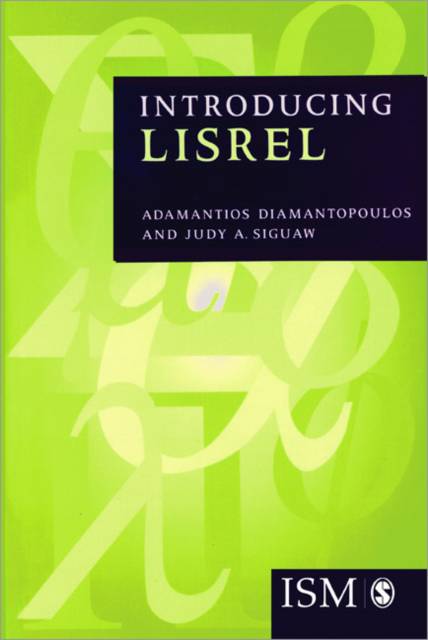
Emphasizing substantive issues rather than intricate statistical details, this book provides a comprehensive introduction to LISREL for structural equation modeling (SEM) using a non-technical, user-oriented approach that. The emphasis is on: - exposing the reader to the major steps associated with the formulation and testing of a model under the LISREL framework - describing the key decisions associated with each step - highlighting potential problems and limitations associated with LISREL modeling - assisting the interpretation of LISREL input and output files. The overall aim is to provide a critical understanding of what is really involved in LISREL modeling and sensitize the reader against `mechanically′ fitting or modifying models. The entire range of decisions associated with the practical application of the LISREL program is covered in a user-friendly fashion. Concrete examples are used throughout to illustrate issues relating to model conceptualization, specification, identification, estimation, evaluation, modification, and cross-validation and illustrated with actual program output. The program is made much more accessible by adopting the more user-friendly SIMPLIS command language for preparing input files. Although primarily aimed at beginning users, readers are directed to further reading together with a comprehensive bibliography for the more advanced user.
Specificaties
Betrokkenen
- Auteur(s):
- Uitgeverij:
Inhoud
- Aantal bladzijden:
- 192
- Taal:
- Engels
- Reeks:
Eigenschappen
- Productcode (EAN):
- 9780761951711
- Verschijningsdatum:
- 22/09/2000
- Uitvoering:
- Paperback
- Formaat:
- Trade paperback (VS)
- Afmetingen:
- 162 mm x 233 mm
- Gewicht:
- 299 g


Alleen bij Standaard Boekhandel
+ 311 punten op je klantenkaart van Standaard Boekhandel
Cadeau

AANGERADEN


Beoordelingen
We publiceren alleen reviews die voldoen aan de voorwaarden voor reviews. Bekijk onze voorwaarden voor reviews.