


- Afhalen na 1 uur in een winkel met voorraad
- Gratis thuislevering in België vanaf € 30
- Ruim aanbod met 7 miljoen producten
- Afhalen na 1 uur in een winkel met voorraad
- Gratis thuislevering in België vanaf € 30
- Ruim aanbod met 7 miljoen producten





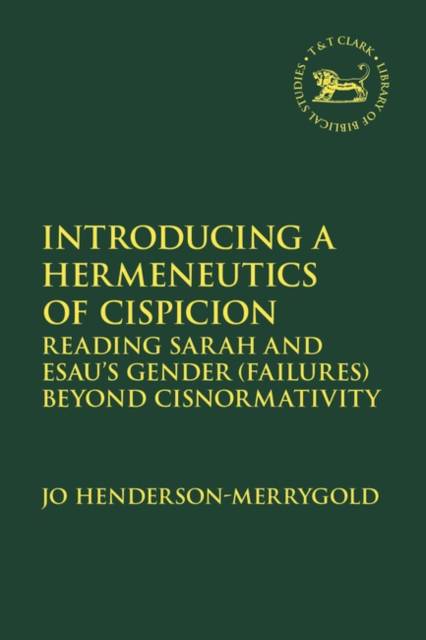
Introducing a Hermeneutics of Cispicion
Reading Sarah and Esau's Gender (Failures) Beyond Cisnormativity
Jo Henderson-Merrygold
€ 67,95
+ 135 punten
Omschrijving
A hermeneutics of cispicion challenges cisnormative presuppositions that shape and, at times, occlude the variations in gender and sex exhibited by key characters in the ancestral narrative of Genesis 12-50. It charts the progression from Paul Ricoeur's hermeneutics of suspicion, through liberation, feminist and queer approaches. Focusing on Deryn Guest's queer and trans hermeneutics, Henderson-Merrygold then offers a new strategy for reading against fixed, binary gender assumptions, where a character's sex always matches that assigned at birth.
The initial case study addresses Sarah, who is the proto-matriarch of the ancestral narratives in Genesis. Masculinities contrast with femininities, and Sarah's own agency makes the picture of a consistent gender hard to identify. By closely reading the text, different facets of Sarah's story emerge to emphasise how much the narrative directs the reader towards a cisnormative reading. However, Henderson-Merrygold shows it is not only the images of Sarah as feminine woman and mother that remain visible. The subject of the second case study, Esau, is regularly judged to be a hypermasculine character due to his bodily appearance, but repeatedly fails to fulfil the expectations related to that appearance. Though often condemned as a poor example of (hyper)masculinity, a cispicious reading identifies a richer and more nuanced figure. Attending to Esau's actions, his rejection of the gendered expectations appears intentional, allowing him to settle more comfortably into his own identity. This project advocates for, and demonstrates the value of, creative, interpretations of biblical texts that challenge both malestream and feminist gender assumptions.Specificaties
Betrokkenen
- Auteur(s):
- Uitgeverij:
Inhoud
- Aantal bladzijden:
- 240
- Taal:
- Engels
- Reeks:
Eigenschappen
- Productcode (EAN):
- 9780567713124
- Verschijningsdatum:
- 11/12/2025
- Uitvoering:
- Paperback
- Formaat:
- Trade paperback (VS)
- Afmetingen:
- 156 mm x 234 mm
- Gewicht:
- 335 g


Alleen bij Standaard Boekhandel
+ 135 punten op je klantenkaart van Standaard Boekhandel
Cadeau

AANGERADEN


Beoordelingen
We publiceren alleen reviews die voldoen aan de voorwaarden voor reviews. Bekijk onze voorwaarden voor reviews.