


- Afhalen na 1 uur in een winkel met voorraad
- Gratis thuislevering in België vanaf € 30
- Ruim aanbod met 7 miljoen producten
- Afhalen na 1 uur in een winkel met voorraad
- Gratis thuislevering in België vanaf € 30
- Ruim aanbod met 7 miljoen producten





€ 25,45
+ 50 punten
Omschrijving
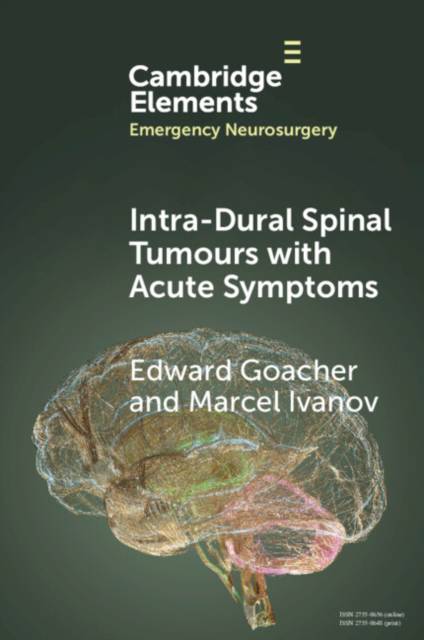
Intra-dural spinal tumours are a rare, yet diverse group of neoplasms, which may occur anywhere along the spinal neuroaxis. Their clinical presentations are typically slow and progressive in nature. Signs and symptoms are dictated by tumour location and size, and occur due to the sequalae of mass effect, oedema, ischaemia and subsequent metabolic dysfunction of neural tissue occurring secondary to compression of neural elements and neural vasculature. Back/neck pain and stiffness are the most common presenting complaint for patients presenting with intra-dural spinal tumours. Further symptoms are dependent on the location of the tumour. Lesions that compress or develop within the spinal cord are associated with upper motor neuron (myelopathic) signs and symptoms, whilst lesions compressing spinal nerves alone are associated with lower motor neuron (radicular) signs and symptoms. In some circumstances, a mixed picture of both upper and lower motor neuron symptoms may also be observed.
Specificaties
Betrokkenen
- Auteur(s):
- Uitgeverij:
Inhoud
- Aantal bladzijden:
- 28
- Taal:
- Engels
- Reeks:
Eigenschappen
- Productcode (EAN):
- 9781009413473
- Verschijningsdatum:
- 2/04/2026
- Uitvoering:
- Paperback
- Formaat:
- Trade paperback (VS)
- Afmetingen:
- 152 mm x 229 mm
- Gewicht:
- 49 g


Alleen bij Standaard Boekhandel
+ 50 punten op je klantenkaart van Standaard Boekhandel
CADEAU

AANGERADEN


Beoordelingen
We publiceren alleen reviews die voldoen aan de voorwaarden voor reviews. Bekijk onze voorwaarden voor reviews.