


- Afhalen na 1 uur in een winkel met voorraad
- Gratis thuislevering in België vanaf € 30
- Ruim aanbod met 7 miljoen producten
- Afhalen na 1 uur in een winkel met voorraad
- Gratis thuislevering in België vanaf € 30
- Ruim aanbod met 7 miljoen producten





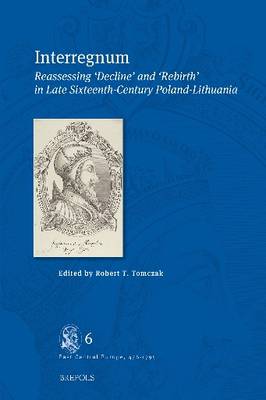
Interregnum
Reassessing 'Decline' and 'Rebirth' in Late Sixteenth-Century Poland-Lithuania
Robert Tomczak
€ 95,40
+ 190 punten
Omschrijving
The death of king Sigismund II Augustus in 1572 ended nearly two centuries of rule by the Jagiellon dynasty in Poland and Lithuania. With the throne vacant during the two interregna, the nobility sought solutions to provide for governance of the newly united Poland-Lithuania, including the nature and rules of royal succession. The constitutional and political debate opened the way to the innovative proposal that each and every male member of the noble estate should cast vote in an election of their king. This 'innovation', combined with the fear of the rise of an absolute monarchy, led to the enshrining of the principle of non-hereditary royal succession. As a result, a new political practice specific to Poland-Lithuania emerged and remained in force for the next two centuries. Each of the contributions to this volume examines a particular aspect of the last years of the reign of Sigismund II Augustus in Poland and Lithuania, as well as the period following his death and successive elections of Henry of Valois, and Anna Jagiellon and Stephen Báthory. Each author offers a specific insight into the broad political, economic, and social changes experienced by both Jagiellon realms and their impact on the development of the new Polish-Lithuanian Commonwealth.
Specificaties
Betrokkenen
- Auteur(s):
- Uitgeverij:
Inhoud
- Aantal bladzijden:
- 300
- Taal:
- Engels
- Reeks:
- Reeksnummer:
- nr. 6
Eigenschappen
- Productcode (EAN):
- 9782503601250
- Verschijningsdatum:
- 18/04/2026
- Uitvoering:
- Hardcover
- Formaat:
- Genaaid
- Gewicht:
- 907 g


Alleen bij Standaard Boekhandel
+ 190 punten op je klantenkaart van Standaard Boekhandel
Cadeau

AANGERADEN


Beoordelingen
We publiceren alleen reviews die voldoen aan de voorwaarden voor reviews. Bekijk onze voorwaarden voor reviews.