


- Afhalen na 1 uur in een winkel met voorraad
- Gratis thuislevering in België vanaf € 30
- Ruim aanbod met 7 miljoen producten
- Afhalen na 1 uur in een winkel met voorraad
- Gratis thuislevering in België vanaf € 30
- Ruim aanbod met 7 miljoen producten





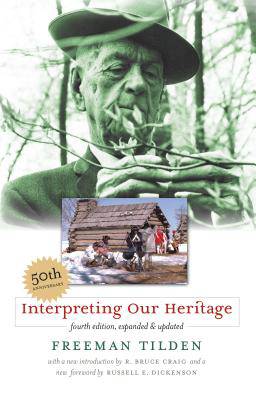
Omschrijving
Every year millions of Americans visit national parks and monuments, state and municipal parks, battlefields, historic houses, and museums. By means of guided walks and talks, tours, exhibits, and signs, visitors experience these areas through a very special kind of communication technique known as "interpretation." For fifty years, Freeman Tilden's Interpreting Our Heritage has been an indispensable sourcebook for those who are responsible for developing and delivering interpretive programs. This expanded and revised anniversary edition includes not only Tilden's classic work but also an entirely new selection of accompanying photographs, five additional essays by Tilden on the art and craft of interpretation, a new foreword by former National Park Service director Russell Dickenson, and an introduction by R. Bruce Craig that puts Tilden's writings into perspective for present and future generations.
Whether the challenge is to make a prehistoric site come to life; to explain the geological basis behind a particular rock formation; to touch the hearts and minds of visitors to battlefields, historic homes, and sites; or to teach a child about the wonders of the natural world, Tilden's book, with its explanation of the famed "six principles" of interpretation, provides a guiding hand.
For anyone interested in our natural and historic heritage -- park volunteers and rangers, museum docents and educators, new and seasoned professional heritage interpreters, and those lovingly characterized by Tilden as "happy amateurs" -- Interpreting Our Heritage and Tilden's later interpretive writings, included in this edition, collectively provide the essential foundation for bringing into focus the truths that lie beyond what the eye sees.
Whether the challenge is to make a prehistoric site come to life; to explain the geological basis behind a particular rock formation; to touch the hearts and minds of visitors to battlefields, historic homes, and sites; or to teach a child about the wonders of the natural world, Tilden's book, with its explanation of the famed "six principles" of interpretation, provides a guiding hand.
For anyone interested in our natural and historic heritage -- park volunteers and rangers, museum docents and educators, new and seasoned professional heritage interpreters, and those lovingly characterized by Tilden as "happy amateurs" -- Interpreting Our Heritage and Tilden's later interpretive writings, included in this edition, collectively provide the essential foundation for bringing into focus the truths that lie beyond what the eye sees.
Specificaties
Betrokkenen
- Auteur(s):
- Uitgeverij:
Inhoud
- Aantal bladzijden:
- 224
- Taal:
- Engels
Eigenschappen
- Productcode (EAN):
- 9780807858677
- Verschijningsdatum:
- 18/03/2008
- Uitvoering:
- Paperback
- Formaat:
- Trade paperback (VS)
- Afmetingen:
- 140 mm x 213 mm
- Gewicht:
- 249 g


Alleen bij Standaard Boekhandel
+ 66 punten op je klantenkaart van Standaard Boekhandel
Cadeau

AANGERADEN


Beoordelingen
We publiceren alleen reviews die voldoen aan de voorwaarden voor reviews. Bekijk onze voorwaarden voor reviews.