


- Afhalen na 1 uur in een winkel met voorraad
- Gratis thuislevering in België vanaf € 30
- Ruim aanbod met 7 miljoen producten
- Afhalen na 1 uur in een winkel met voorraad
- Gratis thuislevering in België vanaf € 30
- Ruim aanbod met 7 miljoen producten





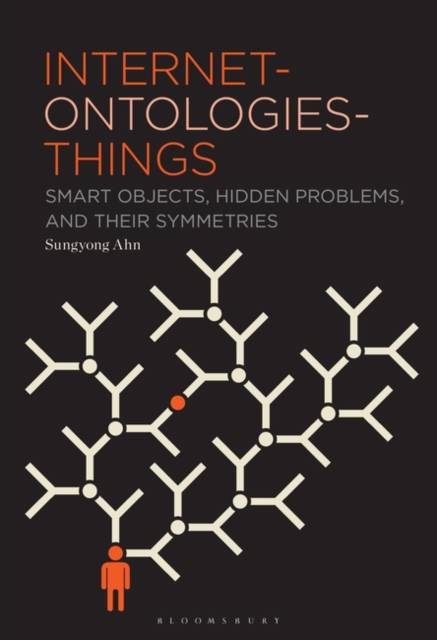
Internet-Ontologies-Things
Smart Objects, Hidden Problems, and Their Symmetries
Sungyong Ahn
Hardcover | Engels
€ 220,45
+ 440 punten
Omschrijving
Internet-ontologies-Things explores how power mobilizes algorithmic and ontological objects, for example smartwatches and smart buildings, to uncover hidden problems within the physical domains of the IoT.
One popular approach of software studies in recent times is to think of algorithmic objects - like the 'things' in what is known as the "Internet of Things" (IoT) - as ontological agents to the same extent as the humans who use them. While post-humanist philosophies, such as speculative realism and object-oriented ontology, have provided a theoretical foundation for this methodological elevation of objects to autonomous and sentient beings, the complicity between this philosophical discourse and the material transformation of our everyday lives, which are embedded with these "smart" objects, remains relatively underexplored. Within this constantly changing infrastructure, Internet-ontologies-Things: Smart Objects, Hidden Problems, and their Symmetries reveals a new form of economic and political power whose algorithmic governance finds its legitimacy in our newly cultivated paranoia about unknown and perhaps unknowable computational problems. In its examination of our smart world, this book illuminates the mechanisms by which this power mobilizes various algorithmic and ontological objects, from smart wearables to smart buildings, to identify a greater number of hidden problems within the physical domains of the IoT, from city sidewalks to the nerves and organs of our very own bodies.Specificaties
Betrokkenen
- Auteur(s):
- Uitgeverij:
Inhoud
- Aantal bladzijden:
- 208
- Taal:
- Engels
Eigenschappen
- Productcode (EAN):
- 9781501399244
- Verschijningsdatum:
- 19/10/2023
- Uitvoering:
- Hardcover
- Formaat:
- Genaaid
- Afmetingen:
- 152 mm x 229 mm
- Gewicht:
- 444 g


Alleen bij Standaard Boekhandel
+ 440 punten op je klantenkaart van Standaard Boekhandel
Cadeau

AANGERADEN


Beoordelingen
We publiceren alleen reviews die voldoen aan de voorwaarden voor reviews. Bekijk onze voorwaarden voor reviews.