



Je cadeautjes zeker op tijd in huis hebben voor de feestdagen? Kom langs in onze winkels en vind het perfecte geschenk!
- Afhalen na 1 uur in een winkel met voorraad
- Gratis thuislevering in België vanaf € 30
- Ruim aanbod met 7 miljoen producten
Je cadeautjes zeker op tijd in huis hebben voor de feestdagen? Kom langs in onze winkels en vind het perfecte geschenk!
- Afhalen na 1 uur in een winkel met voorraad
- Gratis thuislevering in België vanaf € 30
- Ruim aanbod met 7 miljoen producten





Omschrijving
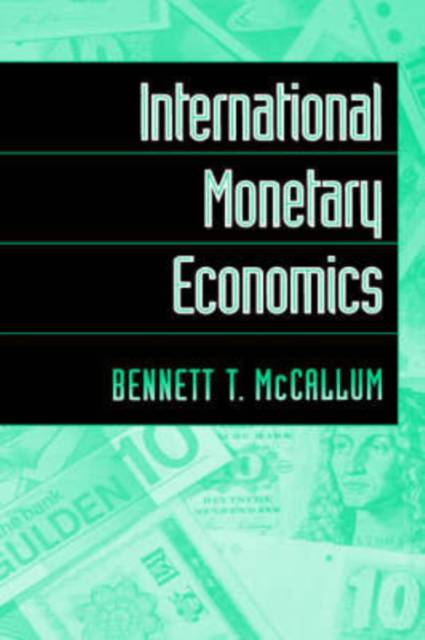
International Monetary Economics presents a brief introduction to the major topics of the subject area together with an analytical framework that is designed to facilitate a better understanding of international monetary economics. The text concentrates on concepts and relationships involving exchange rates and balance-of-payments magnitudes; the construction and manipulation of a small but versatile model of exchange rate and balance-of-payments behavior; and the description of current and prospective arrangements for multicountry cooperation in Europe and elsewhere. These broad topics are arranged in three main parts. In Part I the author presents basic concepts and a historical perspective on the US and global economy, with emphasis on the evolution of international monetary institutions since 1800. Part II introduces the basic analytical model -- usable with fixed and floating exchange rates, in which capital mobility is complete, real exchange rates are variable, and investment spending is endogenous. In addition, there is a relatively long chapter devoted to dynamic analysis with rational expectations. And finally, Part III contains three chapters on policy, including a full chapter on the European Monetary System, making this text ideal for both economic and finance courses that specifically focus on international economics.
Specificaties
Betrokkenen
- Auteur(s):
- Uitgeverij:
Inhoud
- Aantal bladzijden:
- 280
- Taal:
- Engels
Eigenschappen
- Productcode (EAN):
- 9780195094947
- Verschijningsdatum:
- 25/01/1996
- Uitvoering:
- Hardcover
- Formaat:
- Genaaid
- Afmetingen:
- 163 mm x 241 mm
- Gewicht:
- 503 g



Alleen bij Standaard Boekhandel
+ 209 punten op je klantenkaart van Standaard Boekhandel
CADEAU


Beoordelingen
We publiceren alleen reviews die voldoen aan de voorwaarden voor reviews. Bekijk onze voorwaarden voor reviews.