


- Afhalen na 1 uur in een winkel met voorraad
- Gratis thuislevering in België vanaf € 30
- Ruim aanbod met 7 miljoen producten
- Afhalen na 1 uur in een winkel met voorraad
- Gratis thuislevering in België vanaf € 30
- Ruim aanbod met 7 miljoen producten





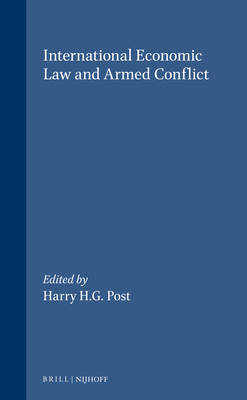
International Economic Law and Armed Conflict
€ 484,95
+ 969 punten
Omschrijving
The impact of (international) armed conflict on international economic law has become a subject of renewed interest since, in particular, the Iran--Iraq War of 1980--1988 and, to a lesser extent, the Falkland/Malvinas War of 1982. The military operations against Iraq during the 1990--1991 Kuwait crisis, and, more recently, the events in the former Yugoslavia have added a new dimension to this part of international law. The subject of this book is the reciprocal effect of armed conflict and international economic relations. The rules on visit, search, diversion and capture, instruments such as blockade or the rules on termination or suspension of trade agreements and the law of neutrality provide classic examples. `Traditional' and `classic' do not necessarily mean that these long-standing rules are now invalid. One of the purposes of this book is to examine the state of important rules of international prize law and of fundamental principles of the law of neutrality.
The essays collected here contribute to a few important capita of international economic law.
The essays collected here contribute to a few important capita of international economic law.
Specificaties
Betrokkenen
- Uitgeverij:
Inhoud
- Aantal bladzijden:
- 216
- Taal:
- Engels
- Reeks:
- Reeksnummer:
- nr. 18
Eigenschappen
- Productcode (EAN):
- 9780792331896
- Verschijningsdatum:
- 1/10/1994
- Uitvoering:
- Hardcover
- Formaat:
- Genaaid
- Afmetingen:
- 155 mm x 235 mm
- Gewicht:
- 489 g

Alleen bij Standaard Boekhandel
+ 969 punten op je klantenkaart van Standaard Boekhandel
Cadeau

AANGERADEN


Beoordelingen
We publiceren alleen reviews die voldoen aan de voorwaarden voor reviews. Bekijk onze voorwaarden voor reviews.