


- Afhalen na 1 uur in een winkel met voorraad
- Gratis thuislevering in België vanaf € 30
- Ruim aanbod met 7 miljoen producten
- Afhalen na 1 uur in een winkel met voorraad
- Gratis thuislevering in België vanaf € 30
- Ruim aanbod met 7 miljoen producten





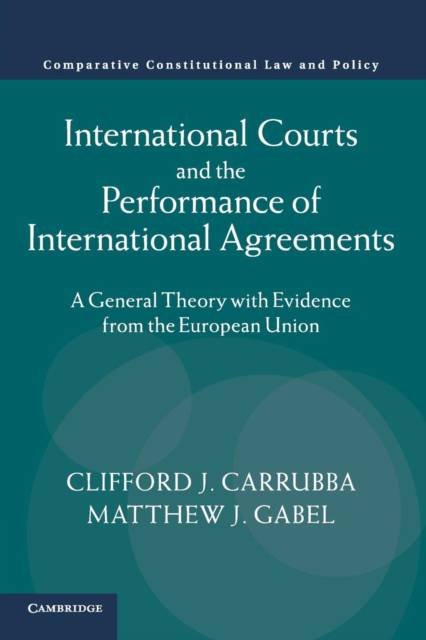
International Courts and the Performance of International Agreements
A General Theory with Evidence from the European Union
Clifford J Carrubba, Matthew J Gabel
€ 67,95
+ 135 punten
Uitvoering
Omschrijving
Nations often turn to international courts to help with overcoming collective-action problems associated with international relations. However, these courts generally cannot enforce their rulings, which begs the question: how effective are international courts? This book proposes a general theory of international courts that assumes a court has no direct power over national governments. Member states are free to ignore both the international agreement and the rulings by the court created to enforce that agreement. The theory demonstrates that such a court can, in fact, facilitate cooperation with international law, but only within important political constraints. The authors examine the theoretical argument in the context of the European Union. Using an original data set of rulings by the European Court of Justice, they find that the disposition of court rulings and government compliance with those rulings comport with the theory's predictions.
Specificaties
Betrokkenen
- Auteur(s):
- Uitgeverij:
Inhoud
- Aantal bladzijden:
- 252
- Taal:
- Engels
- Reeks:
Eigenschappen
- Productcode (EAN):
- 9781107677265
- Verschijningsdatum:
- 11/05/2017
- Uitvoering:
- Paperback
- Formaat:
- Trade paperback (VS)
- Afmetingen:
- 152 mm x 229 mm
- Gewicht:
- 340 g



Alleen bij Standaard Boekhandel
+ 135 punten op je klantenkaart van Standaard Boekhandel
Cadeau

AANGERADEN


Beoordelingen
We publiceren alleen reviews die voldoen aan de voorwaarden voor reviews. Bekijk onze voorwaarden voor reviews.