


- Afhalen na 1 uur in een winkel met voorraad
- Gratis thuislevering in België vanaf € 30
- Ruim aanbod met 7 miljoen producten
- Afhalen na 1 uur in een winkel met voorraad
- Gratis thuislevering in België vanaf € 30
- Ruim aanbod met 7 miljoen producten





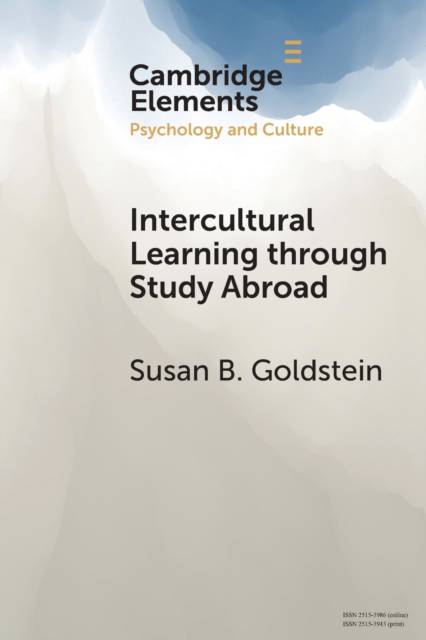
Intercultural Learning Through Study Abroad
Susan B Goldstein
€ 36,45
+ 72 punten
Omschrijving
Over the past three decades, the population of international students throughout the world has steadily increased. Although university students choose to study in locations other than their home country for a variety of reasons, including professional development and disciplinary training, nearly all education abroad programs have intercultural learning as a central goal. In this Element, perspectives derived from cross-cultural psychological research are applied to an investigation of the effectiveness of study abroad as a mechanism for intercultural learning. Effectiveness is broadly defined and includes not only overall favorable program outcomes, such as gains in intercultural skills, knowledge, attitudes, and awareness, but also a recognition that study abroad experiences and outcomes may vary depending upon participants' diverse and intersectional identities. Best practices for facilitating intercultural learning through study abroad are identified and strategies are outlined for addressing the methodological challenges of research in this area.
Specificaties
Betrokkenen
- Auteur(s):
- Uitgeverij:
Inhoud
- Aantal bladzijden:
- 82
- Taal:
- Engels
- Reeks:
Eigenschappen
- Productcode (EAN):
- 9781009126960
- Verschijningsdatum:
- 12/05/2022
- Uitvoering:
- Paperback
- Formaat:
- Trade paperback (VS)
- Afmetingen:
- 152 mm x 229 mm
- Gewicht:
- 122 g


Alleen bij Standaard Boekhandel
+ 72 punten op je klantenkaart van Standaard Boekhandel
Cadeau

AANGERADEN


Beoordelingen
We publiceren alleen reviews die voldoen aan de voorwaarden voor reviews. Bekijk onze voorwaarden voor reviews.