


- Afhalen na 1 uur in een winkel met voorraad
- Gratis thuislevering in België vanaf € 30
- Ruim aanbod met 7 miljoen producten
- Afhalen na 1 uur in een winkel met voorraad
- Gratis thuislevering in België vanaf € 30
- Ruim aanbod met 7 miljoen producten





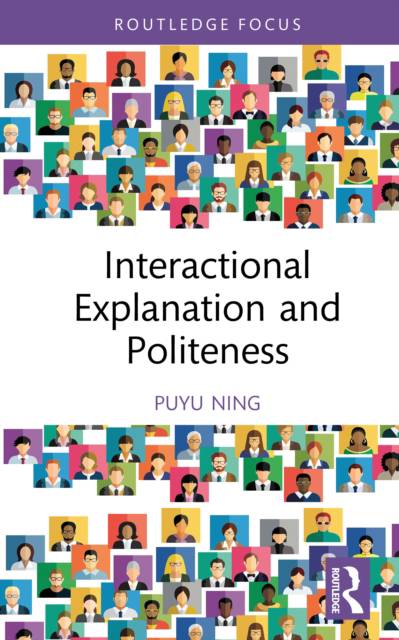
Interactional Explanation and Politeness
Puyu Ning
€ 75,95
+ 151 punten
Omschrijving
This book explores the pragmatic concept of interactional explanation (IE) in linguistic (im)politeness research.
The volume establishes a working understanding of IE, understood as the response to a perceived appeal for information in an interaction. The book considers how IE is pragmatically sought, given, interpreted, and evaluated in interactions, processes which give rise to linguistic (im)politeness. This book highlights two case studies on Chinese linguacultural nuances. In showcasing this particular context, Ning not only extends Chen's work on self-politeness theory, in which the desire to "save face" impacts what and how one speaks, but underscores the importance of studying linguacultural variations in order to deepen our understanding of the connections between IE and linguistic (im)politeness research.
This book will appeal to students and researchers interested in interactional phenomena, in such areas as pragmatics, language and communication, and second and foreign language and teaching.
Specificaties
Betrokkenen
- Auteur(s):
- Uitgeverij:
Inhoud
- Aantal bladzijden:
- 80
- Taal:
- Engels
- Reeks:
Eigenschappen
- Productcode (EAN):
- 9781032963884
- Verschijningsdatum:
- 27/05/2026
- Uitvoering:
- Hardcover
- Formaat:
- Genaaid
- Afmetingen:
- 140 mm x 216 mm
- Gewicht:
- 258 g


Alleen bij Standaard Boekhandel
+ 151 punten op je klantenkaart van Standaard Boekhandel
Cadeau

AANGERADEN


Beoordelingen
We publiceren alleen reviews die voldoen aan de voorwaarden voor reviews. Bekijk onze voorwaarden voor reviews.