



Je cadeautjes zeker op tijd in huis hebben voor de feestdagen? Kom langs in onze winkels en vind het perfecte geschenk!
- Afhalen na 1 uur in een winkel met voorraad
- Gratis thuislevering in België vanaf € 30
- Ruim aanbod met 7 miljoen producten
Je cadeautjes zeker op tijd in huis hebben voor de feestdagen? Kom langs in onze winkels en vind het perfecte geschenk!
- Afhalen na 1 uur in een winkel met voorraad
- Gratis thuislevering in België vanaf € 30
- Ruim aanbod met 7 miljoen producten





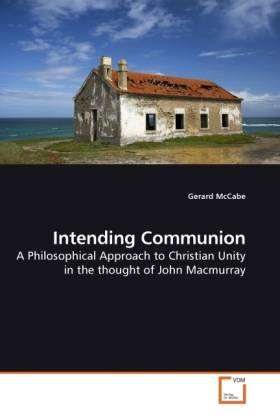
Intending Communion
A Philosophical Approach to Christian Unity in the thought of John Macmurray
Gerard McCabe
Paperback | Engels
€ 106,45
+ 212 punten
Omschrijving
The topic of Christian unity has become a central issue for all of the Christian Churches. However something which has been largely overlooked in the whole ecumenical question is the need for an appropriate philosophical basis for unity among peoples and among the Churches. Without such a philosophical underpinning, the call to unity can easily be seen as simply a practical pastoral tool for the effective proclamation of the Gospel or as nothing other than emotive rhetoric. In the writings of the Scottish philosopher, John Macmurray we find an approach to ecumenism that provides us with just such a philosophical basis for unity. As both a philosopher and a Christian, Macmurray spent his life attempting to show that we are called to a life of unity with one another. He claims that to be properly human is to seek and to intend communion with others, and in his analysis of the nature of the human person he offers us a way of understanding that the call to Christian unity is not simply a matter of pastoral effectiveness but one that expresses the deepest truth of our human being, that we are most fully ourselves when we are in communion with one another.
Specificaties
Betrokkenen
- Auteur(s):
- Uitgeverij:
Inhoud
- Aantal bladzijden:
- 228
- Taal:
- Engels
Eigenschappen
- Productcode (EAN):
- 9783639244458
- Verschijningsdatum:
- 21/03/2010
- Uitvoering:
- Paperback
- Afmetingen:
- 152 mm x 229 mm
- Gewicht:
- 340 g


Alleen bij Standaard Boekhandel
+ 212 punten op je klantenkaart van Standaard Boekhandel
CADEAU


Beoordelingen
We publiceren alleen reviews die voldoen aan de voorwaarden voor reviews. Bekijk onze voorwaarden voor reviews.