


- Afhalen na 1 uur in een winkel met voorraad
- Gratis thuislevering in België vanaf € 30
- Ruim aanbod met 7 miljoen producten
- Afhalen na 1 uur in een winkel met voorraad
- Gratis thuislevering in België vanaf € 30
- Ruim aanbod met 7 miljoen producten





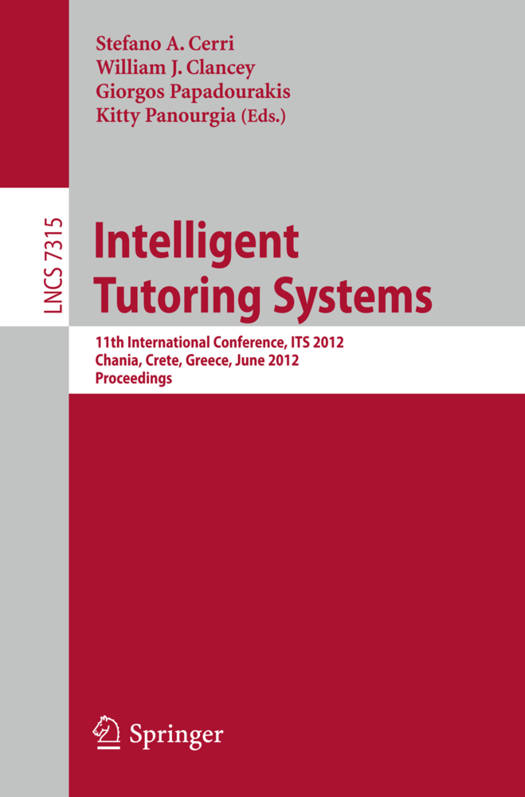
Intelligent Tutoring Systems
11th International Conference, ITS 2012, Chania, Crete, Greece, June 14-18, 2012. Proceedings
Paperback | Engels | Lecture Notes in Computer Science | Programming and Software Engineering | nr. 7315
€ 53,45
+ 106 punten
Omschrijving
Contains the refereed proceedings of the 11th International Conference on "Intelligent Tutoring Systems", ITS 2012, held in Chania, Crete, Greece, in June 2012. This title brings together researchers in computer science, informatics, and artificial intelligence on the one side - and cognitive science, educational psychology, and linguistics.
Specificaties
Betrokkenen
- Uitgeverij:
Inhoud
- Aantal bladzijden:
- 726
- Taal:
- Engels
- Reeks:
- Reeksnummer:
- nr. 7315
Eigenschappen
- Productcode (EAN):
- 9783642309496
- Verschijningsdatum:
- 11/06/2012
- Uitvoering:
- Paperback
- Formaat:
- Trade paperback (VS)
- Afmetingen:
- 152 mm x 236 mm
- Gewicht:
- 1111 g

Alleen bij Standaard Boekhandel
+ 106 punten op je klantenkaart van Standaard Boekhandel
Cadeau

AANGERADEN


Beoordelingen
We publiceren alleen reviews die voldoen aan de voorwaarden voor reviews. Bekijk onze voorwaarden voor reviews.