


- Afhalen na 1 uur in een winkel met voorraad
- Gratis thuislevering in België vanaf € 30
- Ruim aanbod met 7 miljoen producten
- Afhalen na 1 uur in een winkel met voorraad
- Gratis thuislevering in België vanaf € 30
- Ruim aanbod met 7 miljoen producten





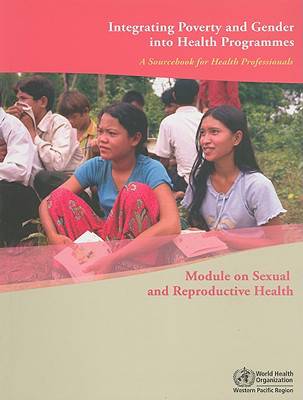
Integrating Poverty and Gender Into Health Programmes
A Sourcebook for Health Professionals
Who Regional Office for the Western Pacific
€ 18,45
+ 36 punten
Uitvoering
Omschrijving
This module is designed to build the capacity of health professionals to analyse and to address the interrelationship between gender and health. The enhanced commitment to addressing gender-based inequalities increasingly requires that health professionals have the knowledge, skills and tools to respond more effectively to the health needs of men and women. Adding gender analysis to the tools employed by health professionals can enable them to design and implement more equitable and effective health progammes. Yet, currently health professionals are not always adequately prepared to address gender issues in their work. This module is designed to help fill this gap.
This module, which is part of a Sourcebook for health professionals, is intended to be used in pre-service and in-service training of health professionals. The module on Sexual and Reproductive health is designed to improve the awareness, knowledge and skills of health professionals on sexual and reproductive health. It is divided into six sections: Section 1 provides an overview of key concepts in sexual and reproductive health and reviews the global and regional burden of mortality and morbidity related to sexual and reproductive health; Section 2 examines What the links are between poverty, gender and sexual and reproductive health; Section 3 discusses why it is important for health professionals to address poverty and gender concerns in sexual and reproductive health, from efficiency, equity and human rights perspectives; Section 4 discusses how health professionals can address poverty and gender concerns in sexual and reproductive health policies, plans and programmes; Section 5 provides notes for facilitators and finally Section 6 contains a collection of tools, resources and references to support health professionals in their work in this field.
This module, which is part of a Sourcebook for health professionals, is intended to be used in pre-service and in-service training of health professionals. The module on Sexual and Reproductive health is designed to improve the awareness, knowledge and skills of health professionals on sexual and reproductive health. It is divided into six sections: Section 1 provides an overview of key concepts in sexual and reproductive health and reviews the global and regional burden of mortality and morbidity related to sexual and reproductive health; Section 2 examines What the links are between poverty, gender and sexual and reproductive health; Section 3 discusses why it is important for health professionals to address poverty and gender concerns in sexual and reproductive health, from efficiency, equity and human rights perspectives; Section 4 discusses how health professionals can address poverty and gender concerns in sexual and reproductive health policies, plans and programmes; Section 5 provides notes for facilitators and finally Section 6 contains a collection of tools, resources and references to support health professionals in their work in this field.
Specificaties
Betrokkenen
- Auteur(s):
- Uitgeverij:
Inhoud
- Aantal bladzijden:
- 115
- Taal:
- Engels
- Reeks:
Eigenschappen
- Productcode (EAN):
- 9789290613893
- Verschijningsdatum:
- 4/06/2009
- Uitvoering:
- Paperback
- Formaat:
- Trade paperback (VS)
- Afmetingen:
- 213 mm x 277 mm
- Gewicht:
- 476 g


Alleen bij Standaard Boekhandel
+ 36 punten op je klantenkaart van Standaard Boekhandel

Beoordelingen
We publiceren alleen reviews die voldoen aan de voorwaarden voor reviews. Bekijk onze voorwaarden voor reviews.