


- Afhalen na 1 uur in een winkel met voorraad
- Gratis thuislevering in België vanaf € 30
- Ruim aanbod met 7 miljoen producten
- Afhalen na 1 uur in een winkel met voorraad
- Gratis thuislevering in België vanaf € 30
- Ruim aanbod met 7 miljoen producten





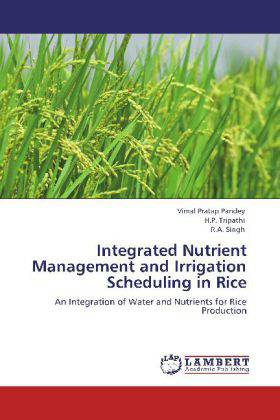
Integrated Nutrient Management and Irrigation Scheduling in Rice
An Integration of Water and Nutrients for Rice Production
Vimal Pratap Pandey, H. P. Tripathi, R. A. Singh
Paperback | Engels
€ 77,45
+ 154 punten
Omschrijving
THE CONCEPT of Integrated Nutrient Management (INM) takes into consideration the nutrient cycle involving soils, crops and live stock, nutrient deficiencies, organic recycling, conjunctive use of organic manures and mineral fertilisers and biological nitrogen fixing potential in rice crop. Fertiliser use should be increased by appropriate techniques such as split application of nutrients at important phonological stages of crop growth, and combination of organic and inorganic fertilisers. Use of indigenous sources such as press mud, green manure, bio compost and vermi-compost, granulated compost material with inorganic sources could result in higher nitrogen use efficiency. The sustained use of organics in rice crop also increases higher uptake of all nutrients when used along with inorganic fertilisers. Application of 30-50 per cent of total nutrients in the form of organic manures would improve the soil physical properties, increase microbial activity, facilitate slow release of nutrients, reduce nutrient losses and provide a long term build up of soil fertility. Application of 7 cm. irrigation 1 DADPW resulted in higher grain yield with green manuring in-situ.
Specificaties
Betrokkenen
- Auteur(s):
- Uitgeverij:
Inhoud
- Aantal bladzijden:
- 124
- Taal:
- Engels
Eigenschappen
- Productcode (EAN):
- 9783847320463
- Verschijningsdatum:
- 9/03/2012
- Uitvoering:
- Paperback
- Afmetingen:
- 152 mm x 220 mm
- Gewicht:
- 191 g


Alleen bij Standaard Boekhandel
+ 154 punten op je klantenkaart van Standaard Boekhandel

Beoordelingen
We publiceren alleen reviews die voldoen aan de voorwaarden voor reviews. Bekijk onze voorwaarden voor reviews.