


- Afhalen na 1 uur in een winkel met voorraad
- Gratis thuislevering in België vanaf € 30
- Ruim aanbod met 7 miljoen producten
- Afhalen na 1 uur in een winkel met voorraad
- Gratis thuislevering in België vanaf € 30
- Ruim aanbod met 7 miljoen producten




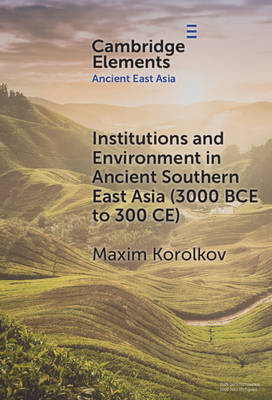
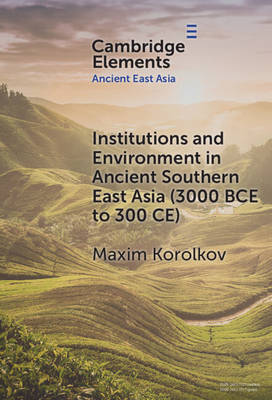
Institutions and Environment in Ancient Southern East Asia (3000 BCE to 300 CE)
Maxim Korolkov
€ 112,95
+ 225 punten
Uitvoering
Omschrijving
Over the past decades, archaeological exploration of southern China has shattered the image of primitive indigenous people and their pristine environments. It is known, for example, that East Asia's largest settlements and hydraulic infrastructures in the third millennium BCE were located in the Yangzi valley, as were some of the most sophisticated metallurgical centers of the following millennium. If southern East Asia was not a backward periphery of the Central Plains, then what created the power asymmetry that made possible 'China's march toward the Tropics'? What did becoming 'Chinese' practically mean for the local populations south of the Yangzi? Why did some of them decide to do so, and what were the alternatives? This Element focuses on the specific ways people in southern East Asia mastered their environment through two forms of cooperation: centralized and intensive, ultimately represented by the states, and decentralized and extensive, exemplified by interaction networks.
Specificaties
Betrokkenen
- Auteur(s):
- Uitgeverij:
Inhoud
- Aantal bladzijden:
- 94
- Taal:
- Engels
- Reeks:
Eigenschappen
- Productcode (EAN):
- 9781009507264
- Verschijningsdatum:
- 30/01/2025
- Uitvoering:
- Hardcover
- Formaat:
- Genaaid
- Afmetingen:
- 152 mm x 229 mm
- Gewicht:
- 299 g


Alleen bij Standaard Boekhandel
+ 225 punten op je klantenkaart van Standaard Boekhandel
AANGERADEN


Beoordelingen
We publiceren alleen reviews die voldoen aan de voorwaarden voor reviews. Bekijk onze voorwaarden voor reviews.