


- Afhalen na 1 uur in een winkel met voorraad
- Gratis thuislevering in België vanaf € 30
- Ruim aanbod met 7 miljoen producten
- Afhalen na 1 uur in een winkel met voorraad
- Gratis thuislevering in België vanaf € 30
- Ruim aanbod met 7 miljoen producten





€ 108,23
+ 216 punten
Uitvoering
Omschrijving
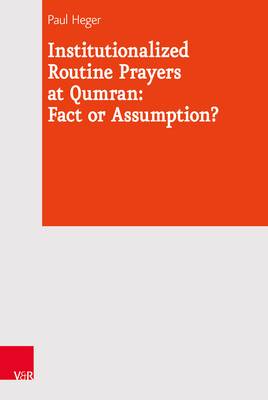
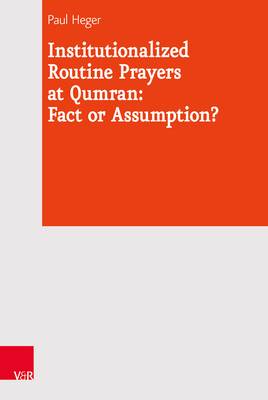
This book challenges scholars' assumption, without any explicit evidence, of institutionalized public prayer with fixed contents and times in the Qumran community. As the book observes, this assumption rests in part on a failure to distinguish between voluntary supplication prayers and biblically mandated blessings and thanks. The book closely examines the three Qumran writings assumed to typify prayer and critiques scholars' attempts to deduce the existence of public prayer from these and other sources, which are most likely pious expressions of individual authors. The lack of indispensable instructions for institutionalized prayer offers circumstantial evidence that such prayer was not practiced at Qumran. This study also explores the assumption that Qumran prayer was intended as a substitute for sacrifices after the group's separation from the temple cult and discusses relevant rabbinic statements. The innovative character of rabbinic fixed prayer is discussed and identified as an element of the fundamental transformation of Jewish theology and practice from worship founded on sacrificial rituals performed by priests at the Jerusalem Temple to abstract, unmediated, direct approaches to God by every Jew in any location. The book also examines Samaritan prayer and detects a variety of attitudes, rules, and customs similar to those found at Qumran that are incompatible with their rabbinic counterparts. This opens the door for investigating religious belief and practice at a crucial period in the history of Western civilization, namely, before the vast rabbinic reform of Judaism after 70 CE.
Specificaties
Betrokkenen
- Auteur(s):
- Uitgeverij:
Inhoud
- Aantal bladzijden:
- 313
- Taal:
- Engels
Eigenschappen
- Productcode (EAN):
- 9783525571316
- Verschijningsdatum:
- 16/09/2019
- Uitvoering:
- Hardcover
- Formaat:
- Genaaid
- Afmetingen:
- 152 mm x 231 mm
- Gewicht:
- 2290 g


Alleen bij Standaard Boekhandel
+ 216 punten op je klantenkaart van Standaard Boekhandel

Beoordelingen
We publiceren alleen reviews die voldoen aan de voorwaarden voor reviews. Bekijk onze voorwaarden voor reviews.