


- Afhalen na 1 uur in een winkel met voorraad
- Gratis thuislevering in België vanaf € 30
- Ruim aanbod met 7 miljoen producten
- Afhalen na 1 uur in een winkel met voorraad
- Gratis thuislevering in België vanaf € 30
- Ruim aanbod met 7 miljoen producten





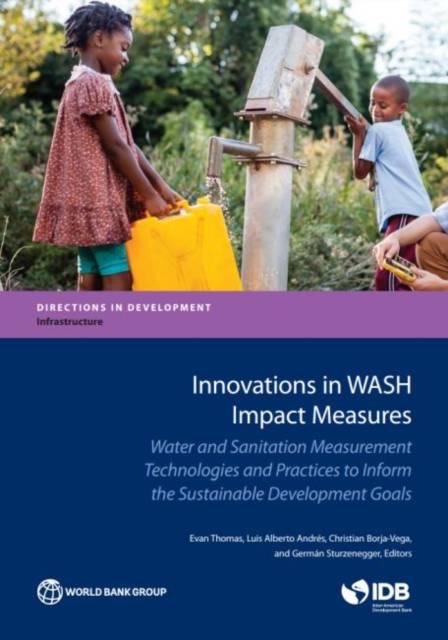
Innovations in Wash Impact Measures
Water and Sanitation Measurement Technologies and Practices to Inform the Sustainable Development Goals
€ 64,45
+ 128 punten
Omschrijving
The new 2030 Agenda for Sustainable Development includes water, sanitation, and hygiene (WASH) at its core. A dedicated Sustainable Development Goal (SDG 6) declares a commitment to "ensure availability and sustainable management of water and sanitation for all." Monitoring progress toward this goal will be challenging: direct measures of water and sanitation service quality and use are either expensive or elusive. However, reliance on household surveys poses limitations and likely overstated progress during the Millennium Development Goal period. In Innovations in WASH Impact Measures: Water and Sanitation Measurement Technologies and Practices to Inform the Sustainable Development Goals, we review the landscape of proven and emerging technologies, methods, and approaches that can support and improve on the WASH indicators proposed for SDG target 6.1, "by 2030, achieve universal and equitable access to safe and affordable drinking water for all," and target 6.2, "by 2030, achieve access to adequate and equitable sanitation and hygiene for all and end open defecation, paying special attention to the needs of women and girls and those in vulnerable situations." Although some of these technologies and methods are readily available, other promising approaches require further field evaluation and cost reductions. Emergent technologies, methods, and data-sharing platforms are increasingly aligned with program impact monitoring. Improved monitoring of water and sanitation interventions may allow more cost-effective and measurable results. In many cases, technologies and methods allow more complete and impartial data in time to allow program improvements. Of the myriad monitoring and evaluation methods, each has its own advantages and limitations. Surveys, ethnographies, and direct observation give context to more continuous and objective electronic sensor data. Overall, combined methodologies can provide a more comprehensive and instructive depiction of WASH usage and help the international development community measure our progress toward reaching the SDG WASH goals.
Specificaties
Betrokkenen
- Uitgeverij:
Inhoud
- Aantal bladzijden:
- 120
- Taal:
- Engels
- Reeks:
Eigenschappen
- Productcode (EAN):
- 9781464811975
- Verschijningsdatum:
- 14/02/2018
- Uitvoering:
- Paperback
- Formaat:
- Trade paperback (VS)
- Afmetingen:
- 178 mm x 254 mm
- Gewicht:
- 222 g

Alleen bij Standaard Boekhandel
+ 128 punten op je klantenkaart van Standaard Boekhandel
CADEAU

AANGERADEN


Beoordelingen
We publiceren alleen reviews die voldoen aan de voorwaarden voor reviews. Bekijk onze voorwaarden voor reviews.