


- Afhalen na 1 uur in een winkel met voorraad
- Gratis thuislevering in België vanaf € 30
- Ruim aanbod met 7 miljoen producten
- Afhalen na 1 uur in een winkel met voorraad
- Gratis thuislevering in België vanaf € 30
- Ruim aanbod met 7 miljoen producten





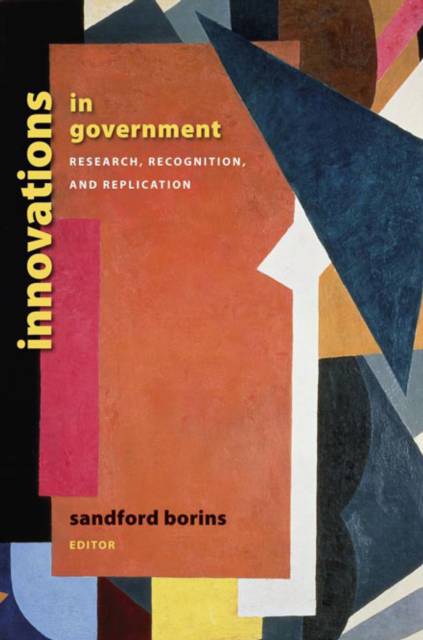
Innovations in Government
Research, Recognition, and Replication
€ 45,95
+ 91 punten
Omschrijving
The Innovations in American Government Awards Program began in 1985 with a grant from the Ford Foundation to the Kennedy School of Government at Harvard to conduct a program of awards for innovations in state and local government. The foundation's objective was ambitious and, in an era of ""government is the problem"" rhetoric, determinedly proactive. It sought to counter declining public confidence in government by highlighting innovative and effective programs. Over twenty years later, research, recognition, and replication are the source of the program's continuing influence and its vitality. What is the future of government innovation? How can innovation enhance the quality of life for citizens and strengthen democratic governance? Innovations in Government: Research, Recognition, and Replication answers these questions by presenting a comprehensive approach to advancing the practice and study of innovation in government. The authors discuss new research on innovation, explore the impact of several programs that recognize innovation, and consider challenges to the replication of innovations. Contributors include Eugene Bardach (University of California- Berkeley), Robert Behn (Harvard University), John D. Donahue (Harvard University), Marta Ferreira Santos Farah (Center for Public Administration and Government, Fundação Getulio Vargas), Archon Fung (Harvard University), Jean Hartley (University of Warwick), Steven Kelman (Harvard University), Gowher Rizvi (Ash Institute for Democratic Governance and Innovation, Harvard University), Peter Spink (Center for Public Administration and Government, Fundação Getulio Vargas), and Jonathan Walters (Governing).
Specificaties
Betrokkenen
- Uitgeverij:
Inhoud
- Aantal bladzijden:
- 244
- Taal:
- Engels
- Reeks:
Eigenschappen
- Productcode (EAN):
- 9780815713777
- Verschijningsdatum:
- 28/02/2008
- Uitvoering:
- Paperback
- Formaat:
- Trade paperback (VS)
- Afmetingen:
- 160 mm x 233 mm
- Gewicht:
- 358 g


Alleen bij Standaard Boekhandel
+ 91 punten op je klantenkaart van Standaard Boekhandel
Cadeau

AANGERADEN


Beoordelingen
We publiceren alleen reviews die voldoen aan de voorwaarden voor reviews. Bekijk onze voorwaarden voor reviews.