


- Afhalen na 1 uur in een winkel met voorraad
- Gratis thuislevering in België vanaf € 30
- Ruim aanbod met 7 miljoen producten
- Afhalen na 1 uur in een winkel met voorraad
- Gratis thuislevering in België vanaf € 30
- Ruim aanbod met 7 miljoen producten





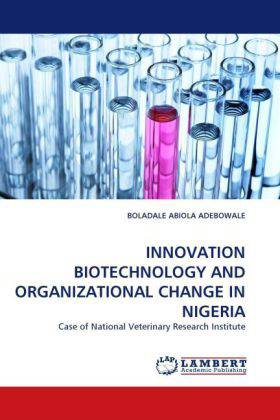
INNOVATION BIOTECHNOLOGY AND ORGANIZATIONAL CHANGE IN NIGERIA
Case of National Veterinary Research Institute
Boladale A. Adebowale
Paperback | Engels
€ 48,45
+ 96 punten
Omschrijving
This paper is an organizational study of a research and development institution in Nigeria. It takes biotechnology as its entry point in an attempt to describe the diversity and role of agents involved in the activities of a relatively successful government research institute the National Veterinary research Institute (NVRI). To understand the dynamics of innovation we analyze the interactions of its scientists with other critical agents in the national innovation system and how collaboration is underpinned by policies and institutions. We found that history, the state of internal infrastructure of the institute as well as the broader institutional environment influence considerably the collaborative arrangements for R&D and production within the sector and the Institute s relationship to other actors. The organization also succeeded in part because it adapted its competences to changing demand conditions of the system.
Specificaties
Betrokkenen
- Auteur(s):
- Uitgeverij:
Inhoud
- Aantal bladzijden:
- 56
- Taal:
- Engels
Eigenschappen
- Productcode (EAN):
- 9783838374628
- Verschijningsdatum:
- 5/07/2010
- Uitvoering:
- Paperback
- Afmetingen:
- 152 mm x 229 mm
- Gewicht:
- 95 g


Alleen bij Standaard Boekhandel
+ 96 punten op je klantenkaart van Standaard Boekhandel
Cadeau

AANGERADEN


Beoordelingen
We publiceren alleen reviews die voldoen aan de voorwaarden voor reviews. Bekijk onze voorwaarden voor reviews.