


- Afhalen na 1 uur in een winkel met voorraad
- Gratis thuislevering in België vanaf € 30
- Ruim aanbod met 7 miljoen producten
- Afhalen na 1 uur in een winkel met voorraad
- Gratis thuislevering in België vanaf € 30
- Ruim aanbod met 7 miljoen producten





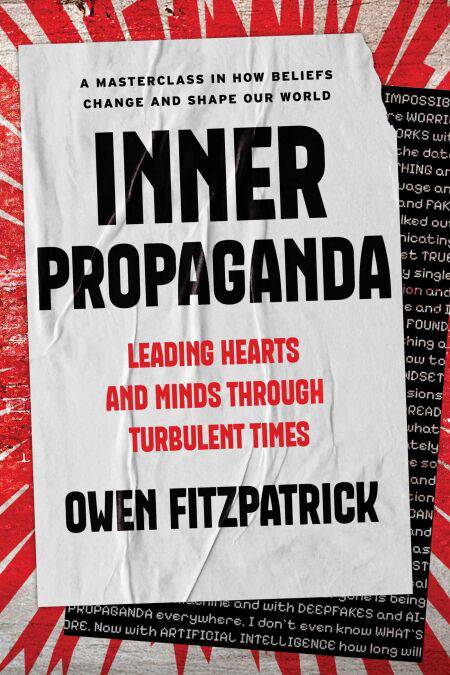
Inner Propaganda E-BOOK
Leading Hearts and Minds Through Turbulent Times
Owen Fitzpatrick
E-book | Engels
€ 14,53
+ 14 punten
Uitvoering
Omschrijving
Right now, your brain is selling you a story about who you are, what's true, and what you should believe.
And you're buying it, even when it sabotages your success.
In Inner Propaganda, psychologist Owen Fitzpatrick reveals the internal persuasion system shaping your thoughts, your decisions, and your reality. After decades studying external propaganda, from witnessing first-hand modern influence operations in North Korea, Afghanistan, and Washington D.C., to analyzing the incredible double agent who helped change the outcome of World War II, Fitzpatrick reached a startling conclusion:
The same tactics that sway nations also operate inside each of us.
Your mind has its own propaganda machine. It manufactures certainty, reinforces old narratives, and keeps you loyal to beliefs that no longer serve you. And in an era of infinite information and AI-generated content, these internal distortions intensify—making it nearly impossible to distinguish between genuine insight and manufactured conviction.
But understanding your own propaganda is the key to understanding everyone else's. Once you see how your brain manipulates you, you finally understand why others believe what they believe. As the current media landscape fragments our relationships, this can help you bridge divides rather than deepen them.
To do this, he offers a deceptively simple framework: Feels Right, Fits In, Makes Sense—three forces that explain why ideas take hold, why we cling to them even when they harm us, and how to reshape beliefs that actually support better mental health, clearer decision-making, and stronger leadership.
Fitzpatrick's insights come from deep research and lived experience. Early struggles with mental health set him on a lifelong path to understand how beliefs form and how they can change—a journey that led him to study the science of influence at Harvard and MIT and advise organizations across 33 countries. Through that work, he explains:
—Why the inner voice you trust most might be lying to you
—Why smart leaders make terrible decisions
—Why teams resist great strategies
—Why the harder you argue, the more people dig in
Your inner story war never ends.
But now, you can choose which side wins.
And you're buying it, even when it sabotages your success.
In Inner Propaganda, psychologist Owen Fitzpatrick reveals the internal persuasion system shaping your thoughts, your decisions, and your reality. After decades studying external propaganda, from witnessing first-hand modern influence operations in North Korea, Afghanistan, and Washington D.C., to analyzing the incredible double agent who helped change the outcome of World War II, Fitzpatrick reached a startling conclusion:
The same tactics that sway nations also operate inside each of us.
Your mind has its own propaganda machine. It manufactures certainty, reinforces old narratives, and keeps you loyal to beliefs that no longer serve you. And in an era of infinite information and AI-generated content, these internal distortions intensify—making it nearly impossible to distinguish between genuine insight and manufactured conviction.
But understanding your own propaganda is the key to understanding everyone else's. Once you see how your brain manipulates you, you finally understand why others believe what they believe. As the current media landscape fragments our relationships, this can help you bridge divides rather than deepen them.
To do this, he offers a deceptively simple framework: Feels Right, Fits In, Makes Sense—three forces that explain why ideas take hold, why we cling to them even when they harm us, and how to reshape beliefs that actually support better mental health, clearer decision-making, and stronger leadership.
Fitzpatrick's insights come from deep research and lived experience. Early struggles with mental health set him on a lifelong path to understand how beliefs form and how they can change—a journey that led him to study the science of influence at Harvard and MIT and advise organizations across 33 countries. Through that work, he explains:
—Why the inner voice you trust most might be lying to you
—Why smart leaders make terrible decisions
—Why teams resist great strategies
—Why the harder you argue, the more people dig in
Your inner story war never ends.
But now, you can choose which side wins.
Specificaties
Betrokkenen
- Auteur(s):
- Uitgeverij:
Inhoud
- Aantal bladzijden:
- 450
- Taal:
- Engels
Eigenschappen
- Productcode (EAN):
- 9781646873227
- Verschijningsdatum:
- 3/08/2026
- Uitvoering:
- E-book
- Beveiligd met:
- Adobe DRM
- Formaat:
- ePub


Alleen bij Standaard Boekhandel
+ 14 punten op je klantenkaart van Standaard Boekhandel
Cadeau

AANGERADEN


Beoordelingen
We publiceren alleen reviews die voldoen aan de voorwaarden voor reviews. Bekijk onze voorwaarden voor reviews.