


- Afhalen na 1 uur in een winkel met voorraad
- Gratis thuislevering in België vanaf € 30
- Ruim aanbod met 7 miljoen producten
- Afhalen na 1 uur in een winkel met voorraad
- Gratis thuislevering in België vanaf € 30
- Ruim aanbod met 7 miljoen producten





€ 144,45
+ 288 punten
Omschrijving
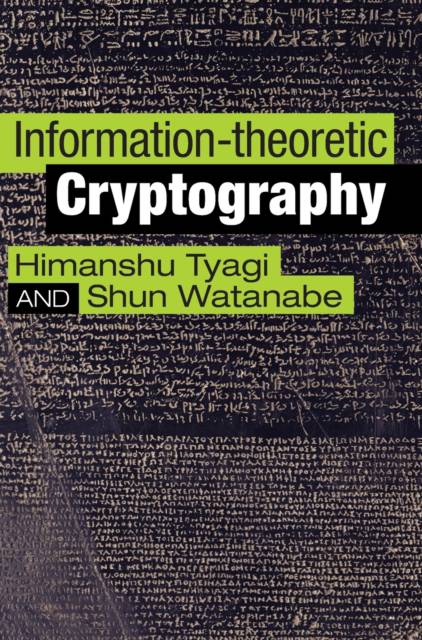
This book offers a mathematical foundation for modern cryptography. It is primarily intended as an introduction for graduate students. Readers should have basic knowledge of probability theory, but familiarity with computational complexity is not required. Starting from Shannon's classic result on secret key cryptography, fundamental topics of cryptography, such as secret key agreement, authentication, secret sharing, and secure computation, are covered. Particular attention is drawn to how correlated randomness can be used to construct cryptographic primitives. To evaluate the efficiency of such constructions, information-theoretic tools, such as smooth min/max entropies and information spectrum, are developed. The broad coverage means the book will also be useful to experts as well as students in cryptography as a reference for information-theoretic concepts and tools.
Specificaties
Betrokkenen
- Auteur(s):
- Uitgeverij:
Inhoud
- Aantal bladzijden:
- 520
- Taal:
- Engels
Eigenschappen
- Productcode (EAN):
- 9781108484336
- Verschijningsdatum:
- 13/04/2023
- Uitvoering:
- Hardcover
- Formaat:
- Genaaid
- Afmetingen:
- 170 mm x 244 mm
- Gewicht:
- 1020 g



Alleen bij Standaard Boekhandel
+ 288 punten op je klantenkaart van Standaard Boekhandel
Cadeau

AANGERADEN


Beoordelingen
We publiceren alleen reviews die voldoen aan de voorwaarden voor reviews. Bekijk onze voorwaarden voor reviews.