


- Afhalen na 1 uur in een winkel met voorraad
- Gratis thuislevering in België vanaf € 30
- Ruim aanbod met 7 miljoen producten
- Afhalen na 1 uur in een winkel met voorraad
- Gratis thuislevering in België vanaf € 30
- Ruim aanbod met 7 miljoen producten





€ 76,45
+ 152 punten
Uitvoering
Omschrijving
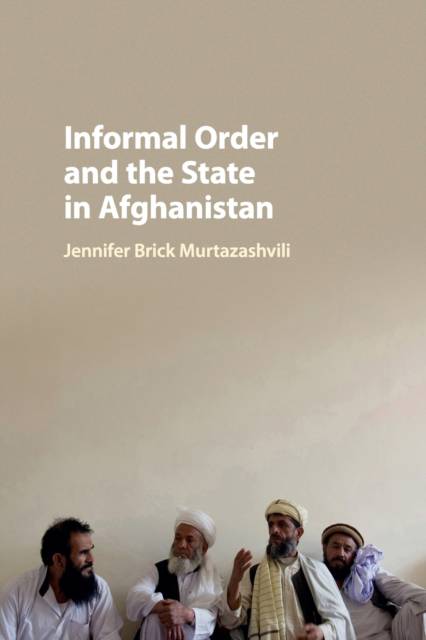
Despite vast efforts to build the state, profound political order in rural Afghanistan is maintained by self-governing, customary organizations. Informal Order and the State in Afghanistan explores the rules governing these organizations to explain why they can provide public goods. Instead of withering during decades of conflict, customary authority adapted to become more responsive and deliberative. Drawing on hundreds of interviews and observations from dozens of villages across Afghanistan, and statistical analysis of nationally representative surveys, Jennifer Brick Murtazashvili demonstrates that such authority enhances citizen support for democracy, enabling the rule of law by providing citizens with a bulwark of defence against predatory state officials. Contrary to conventional wisdom, it shows that 'traditional' order does not impede the development of the state because even the most independent-minded communities see a need for a central government - but question its effectiveness when it attempts to rule them directly and without substantive consultation.
Specificaties
Betrokkenen
- Auteur(s):
- Uitgeverij:
Inhoud
- Aantal bladzijden:
- 364
- Taal:
- Engels
Eigenschappen
- Productcode (EAN):
- 9781107534582
- Verschijningsdatum:
- 2/08/2018
- Uitvoering:
- Paperback
- Formaat:
- Trade paperback (VS)
- Afmetingen:
- 152 mm x 229 mm
- Gewicht:
- 530 g


Alleen bij Standaard Boekhandel
+ 152 punten op je klantenkaart van Standaard Boekhandel
Cadeau

AANGERADEN


Beoordelingen
We publiceren alleen reviews die voldoen aan de voorwaarden voor reviews. Bekijk onze voorwaarden voor reviews.