


- Afhalen na 1 uur in een winkel met voorraad
- Gratis thuislevering in België vanaf € 30
- Ruim aanbod met 7 miljoen producten
- Afhalen na 1 uur in een winkel met voorraad
- Gratis thuislevering in België vanaf € 30
- Ruim aanbod met 7 miljoen producten





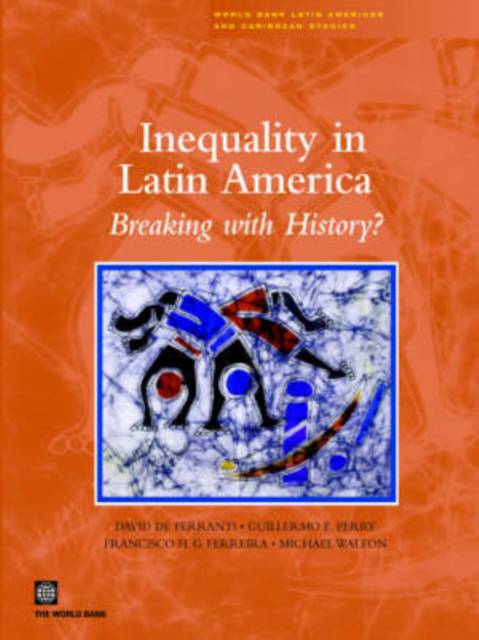
Inequality in Latin America
Breaking with History?
David de Ferranti, Guillermo E Perry, Ferncisco Ferreira
€ 54,45
+ 108 punten
Omschrijving
With the exception of Sub-Saharan Africa, Latin America and the Caribbean has been one of the regions of the world with the greatest inequality. Inequality in Latin America and the Caribbean: Breaking with History? explores why the region suffers from such persistent inequality, identifies how it hampers development, and suggests ways to achieve greater equity in the distribution of wealth, incomes and opportunities. The study draws on data from 20 countries based on household surveys covering 3.6 million people, and reviews extensive economic, sociological and political science studies on inequality in Latin America. To address the deep historical roots of inequality in Latin America, and the powerful contemporary economic, political and social mechanisms that sustain it, Inequality in Latin America and the Caribbean outlines four broad areas for action by governments and civil society groups to break this destructive pattern: Build more open political and social institutions, that allow the poor and historically subordinate groups to gain a greater share of agency, voice and power in society. Ensure that economic institutions and policies seek greater equity, through sound macroeconomic management and equitable, efficient crisis resolution institutions, that avoid the large regressive redistributions that occur during crises, and that allow for saving in good times to enhance access by the poor to social safety nets in bad times. Increase access by the poor to high-quality public services, especially education, health, water and electricity, as well as access to farmland and the rural services. Protect and enforce the property rights of the urban poor. Reform income transfer programs so that they reach the poorest families.
Specificaties
Betrokkenen
- Auteur(s):
- Uitgeverij:
Inhoud
- Aantal bladzijden:
- 402
- Taal:
- Engels
- Reeks:
Eigenschappen
- Productcode (EAN):
- 9780821356654
- Verschijningsdatum:
- 27/04/2004
- Uitvoering:
- Paperback
- Formaat:
- Trade paperback (VS)
- Afmetingen:
- 215 mm x 275 mm
- Gewicht:
- 893 g


Alleen bij Standaard Boekhandel
+ 108 punten op je klantenkaart van Standaard Boekhandel
Cadeau

AANGERADEN


Beoordelingen
We publiceren alleen reviews die voldoen aan de voorwaarden voor reviews. Bekijk onze voorwaarden voor reviews.