


- Afhalen na 1 uur in een winkel met voorraad
- Gratis thuislevering in België vanaf € 30
- Ruim aanbod met 7 miljoen producten
- Afhalen na 1 uur in een winkel met voorraad
- Gratis thuislevering in België vanaf € 30
- Ruim aanbod met 7 miljoen producten


Omschrijving
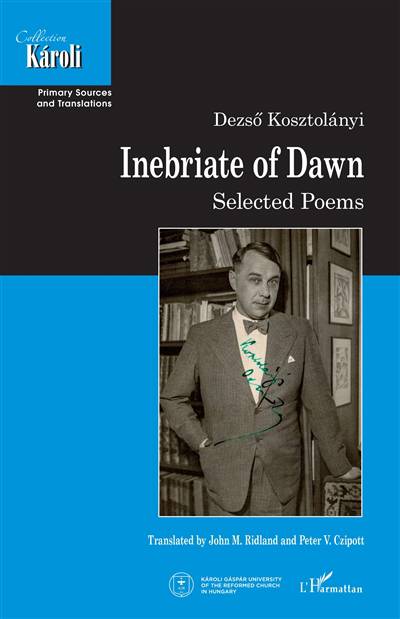
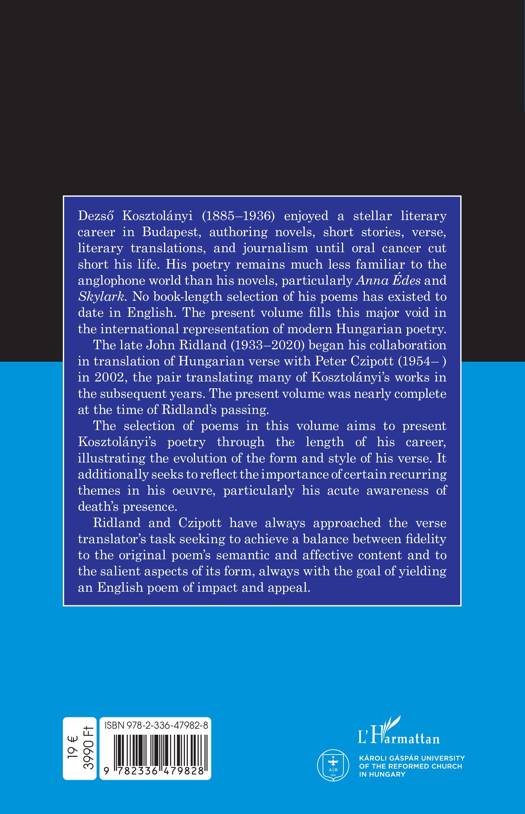
Dezső Kosztolányi (1885–1936) enjoyed a stellar literary career in Budapest, authoring novels, short stories, verse, literary translations, and journalism until oral cancer cut short his life. His poetry remains much less familiar to the anglophone world than his novels, particularly Anna Édes and Skylark. No book-length selection of his poems has existed to date in English. The present volume fills this major void in the international representation of modern Hungarian poetry.
The late John Ridland (1933–2020) began his collaboration in translation of Hungarian verse with Peter Czipott (1954– ) in 2002, the pair translating many of Kosztolányi’s works in the subsequent years. The present volume was nearly complete at the time of Ridland’s passing.
The selection of poems in this volume aims to present Kosztolányi’s poetry through the length of his career, illustrating the evolution of the form and style of his verse. It additionally seeks to reflect the importance of certain recurring themes in his oeuvre, particularly his acute awareness of death’s presence.
Ridland and Czipott have always approached the verse translator’s task seeking to achieve a balance between fidelity to the original poem’s semantic and affective content and to the salient aspects of its form, always with the goal of yielding an English poem of impact and appeal.
The late John Ridland (1933–2020) began his collaboration in translation of Hungarian verse with Peter Czipott (1954– ) in 2002, the pair translating many of Kosztolányi’s works in the subsequent years. The present volume was nearly complete at the time of Ridland’s passing.
The selection of poems in this volume aims to present Kosztolányi’s poetry through the length of his career, illustrating the evolution of the form and style of his verse. It additionally seeks to reflect the importance of certain recurring themes in his oeuvre, particularly his acute awareness of death’s presence.
Ridland and Czipott have always approached the verse translator’s task seeking to achieve a balance between fidelity to the original poem’s semantic and affective content and to the salient aspects of its form, always with the goal of yielding an English poem of impact and appeal.
Specificaties
Betrokkenen
- Auteur(s):
- Vertaler(s):
- Uitgeverij:
Inhoud
- Aantal bladzijden:
- 165
- Taal:
- Engels
- Geïllustreerd:
- Ja
Eigenschappen
- Productcode (EAN):
- 9782336479828
- Verschijningsdatum:
- 16/12/2025
- Uitvoering:
- Paperback
- Afmetingen:
- 160 mm x 240 mm
- Gewicht:
- 260 g


Alleen bij Standaard Boekhandel
+ 38 punten op je klantenkaart van Standaard Boekhandel

Beoordelingen
We publiceren alleen reviews die voldoen aan de voorwaarden voor reviews. Bekijk onze voorwaarden voor reviews.