


- Afhalen na 1 uur in een winkel met voorraad
- Gratis thuislevering in België vanaf € 30
- Ruim aanbod met 7 miljoen producten
- Afhalen na 1 uur in een winkel met voorraad
- Gratis thuislevering in België vanaf € 30
- Ruim aanbod met 7 miljoen producten





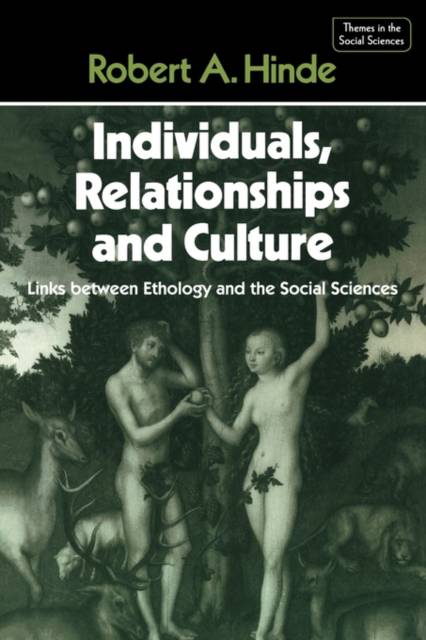
Individuals, Relationships and Culture
Links Between Ethology and the Social Sciences
Robert A Hinde
€ 64,95
+ 129 punten
Omschrijving
Both biologists and social scientists have much to say about human behaviour. Yet attempts to combine their approaches to provide a deeper understanding of human nature have not so far been generally successful. First published in 1987, this book offered an original way of bridging the gap between them. The key to bringing the two approaches together is, Professor Hinde suggests, to recognise crucial distinctions between levels of social complexity (individuals, interactions, relationships and groups), whilst at the same time bearing in mind that all are processes in dialectical relations with each other and with the socio-cultural structure of institutions, beliefs, values, norms and so on. Professor Hinde argues that principles derived from ethology are essential for understanding some aspects of behaviour at the lower levels of social complexity, but have severe limitations at higher ones. This innovative approach will interest research workers, lecturers and students of psychology, biology, anthropology and sociology, as well as other readers seeking a comprehensive understanding of the nature of human social behaviour.
Specificaties
Betrokkenen
- Auteur(s):
- Uitgeverij:
Inhoud
- Aantal bladzijden:
- 220
- Taal:
- Engels
- Reeks:
Eigenschappen
- Productcode (EAN):
- 9780521348447
- Verschijningsdatum:
- 5/11/1987
- Uitvoering:
- Paperback
- Formaat:
- Trade paperback (VS)
- Afmetingen:
- 152 mm x 229 mm
- Gewicht:
- 326 g


Alleen bij Standaard Boekhandel
+ 129 punten op je klantenkaart van Standaard Boekhandel
AANGERADEN


Beoordelingen
We publiceren alleen reviews die voldoen aan de voorwaarden voor reviews. Bekijk onze voorwaarden voor reviews.