


- Afhalen na 1 uur in een winkel met voorraad
- Gratis thuislevering in België vanaf € 30
- Ruim aanbod met 7 miljoen producten
- Afhalen na 1 uur in een winkel met voorraad
- Gratis thuislevering in België vanaf € 30
- Ruim aanbod met 7 miljoen producten





€ 86,45
+ 172 punten
Omschrijving
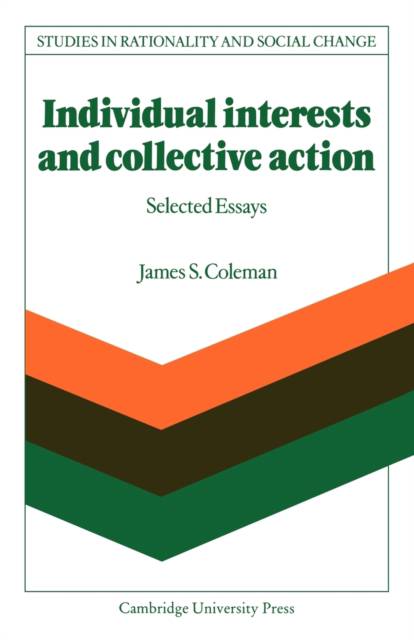
This book brings together the most important theoretical work of James S. Coleman on problems of collective action. Coleman's work has formed a consistent and highly distinguished attempt to find an account of the workings of social and political processes rooted in the rationality of the individual participants. The chapters address in various ways the fundamental Hobbesian problem of order; the question of how a set of self-interested individuals can arrive at some kind of social order. The volume is organised in three parts. The essays in Part I address the problem of social choice as a fundamental problem of the functioning of social systems. Those in Part II deal with relations of power as a crucial aspect of the relations between individual actions and their social consequences. Part III considers the question of the creation of collectivities and the rights that are allocated under them. As a whole, the volume demonstrates the integration and force of the views Coleman has developed.
Specificaties
Betrokkenen
- Auteur(s):
- Uitgeverij:
Inhoud
- Aantal bladzijden:
- 396
- Taal:
- Engels
- Reeks:
Eigenschappen
- Productcode (EAN):
- 9780521108201
- Verschijningsdatum:
- 9/04/2009
- Uitvoering:
- Paperback
- Formaat:
- Trade paperback (VS)
- Afmetingen:
- 140 mm x 216 mm
- Gewicht:
- 498 g



Alleen bij Standaard Boekhandel
+ 172 punten op je klantenkaart van Standaard Boekhandel
Cadeau

AANGERADEN


Beoordelingen
We publiceren alleen reviews die voldoen aan de voorwaarden voor reviews. Bekijk onze voorwaarden voor reviews.