


- Afhalen na 1 uur in een winkel met voorraad
- Gratis thuislevering in België vanaf € 30
- Ruim aanbod met 7 miljoen producten
- Afhalen na 1 uur in een winkel met voorraad
- Gratis thuislevering in België vanaf € 30
- Ruim aanbod met 7 miljoen producten





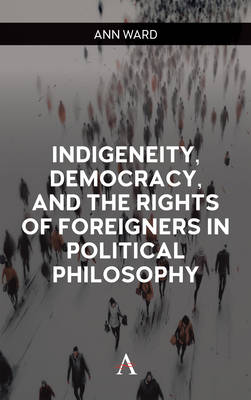
Indigeneity, Democracy, and the Rights of Foreigners in Political Philosophy
Ann Ward
€ 177,45
+ 354 punten
Eenvoudig bestellen
Veilig betalen


Gratis thuislevering vanaf € 30 (via bpost)
Gratis levering in je Standaard Boekhandel
Omschrijving
Explores how debates on migration, indigeneity, and open borders--engaging thinkers such as Plato, Aristotle, Thomas Hobbes, John Locke, and Charles Taylor--shape contemporary democratic crises and the challenge of preserving liberal democracy.
Scholars such as Haig Patapan have confronted the unsettling reality of democratic backsliding in many parts of the world as constitutional, liberal democracies fall into increasing political polarization and face the rise of post-liberal authoritarians who deploy democratic forms and modern technology to legitimize and expand their power. As political philosopher John Rawls predicted more than 30 years ago, central to polarization in contemporary liberal democracies is the politics of migration and disagreement over questions of indigeneity.
Post-liberal regimes today pursue policies that directly challenge contemporary arguments for the justice of open borders. For instance, Joseph Carens argues that according to their own liberal democratic values, many North American and European practices that restrict access to citizenship are indefensible and need reform. Carens critiques Western democracies, arguing that living up to our most basic democratic principles of freedom and equality entails a full commitment to open borders. Similarly, Arash Abizadeh argues that open borders and the denial of state sovereignty are necessary to secure human rights; freedom of movement across borders is a basic human right and necessary to reduce global poverty and inequality. Abizadeh goes further, arguing that human rights doctrine can ground its denial of the state's right to close its borders to foreigners in the democratic theory of popular sovereignty.
Looking to classical political philosophy, scholars such as Rebecca LeMoine argue that far from exhibiting hostility toward foreigners, Plato's dialogues reveal that foreigners play a role similar to that of Socrates: the role of gadfly. Like encounters with Socrates, interactions with foreigners can expose contradictions in the authoritative opinions that undergird one's political community and thus encourage a more self-reflective citizenship. LeMoine concludes that for Plato, the "liberating sting" of cross-cultural engagement, although initially painful, can help citizens cultivate a Socratic knowledge of ignorance and hence the intellectual humility that is essential to the preservation of democracy. This volume examines these themes and fundamental questions of indigeneity, migration, cultural diversity, and the rights of foreigners in the history of political thought.
Specificaties
Betrokkenen
- Auteur(s):
- Uitgeverij:
Inhoud
- Aantal bladzijden:
- 250
- Taal:
- Engels
- Reeks:
- Reeksnummer:
- nr. 1
Eigenschappen
- Productcode (EAN):
- 9781801361200
- Verschijningsdatum:
- 9/02/2027
- Uitvoering:
- Hardcover
- Formaat:
- Genaaid
- Afmetingen:
- 152 mm x 229 mm
- Gewicht:
- 453 g


Alleen bij Standaard Boekhandel
+ 354 punten op je klantenkaart van Standaard Boekhandel
CADEAU

AANGERADEN


Beoordelingen
We publiceren alleen reviews die voldoen aan de voorwaarden voor reviews. Bekijk onze voorwaarden voor reviews.