


- Afhalen na 1 uur in een winkel met voorraad
- Gratis thuislevering in België vanaf € 30
- Ruim aanbod met 7 miljoen producten
- Afhalen na 1 uur in een winkel met voorraad
- Gratis thuislevering in België vanaf € 30
- Ruim aanbod met 7 miljoen producten





€ 36,45
+ 72 punten
Uitvoering
Omschrijving
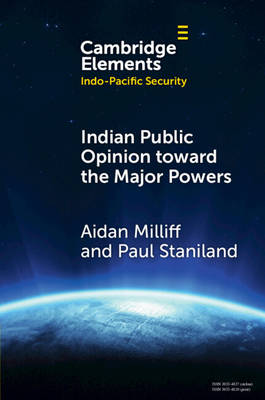
How has Indian public opinion toward the United States, China, and Russia/USSR evolved from the 1950s to the present and to what extent does it shape foreign policy? This Element assembles and analyzes more than sixty years of survey data, including newly recovered United States Information Agency-funded polls from the Indian Institute of Public Opinion as well as contemporary nationally representative surveys from Pew, Gallup, and others. The authors use the data to examine long-run trends, short-term reactions to shocks, and the domestic cleavages that structure opinion. They argue that Indian public attitudes are more coherent and responsive to international events than commonly assumed, yet are unequally voiced across socioeconomic groups. The findings speak both to India-specific debates about democracy and foreign policy and to broader international relations theories of public opinion, accountability, and major power politics.
Specificaties
Betrokkenen
- Auteur(s):
- Uitgeverij:
Inhoud
- Aantal bladzijden:
- 90
- Taal:
- Engels
- Reeks:
Eigenschappen
- Productcode (EAN):
- 9781009842464
- Verschijningsdatum:
- 21/05/2026
- Uitvoering:
- Paperback
- Formaat:
- Trade paperback (VS)
- Afmetingen:
- 152 mm x 229 mm
- Gewicht:
- 131 g


Alleen bij Standaard Boekhandel
+ 72 punten op je klantenkaart van Standaard Boekhandel
Cadeau

AANGERADEN


Beoordelingen
We publiceren alleen reviews die voldoen aan de voorwaarden voor reviews. Bekijk onze voorwaarden voor reviews.