


- Afhalen na 1 uur in een winkel met voorraad
- Gratis thuislevering in België vanaf € 30
- Ruim aanbod met 7 miljoen producten
- Afhalen na 1 uur in een winkel met voorraad
- Gratis thuislevering in België vanaf € 30
- Ruim aanbod met 7 miljoen producten





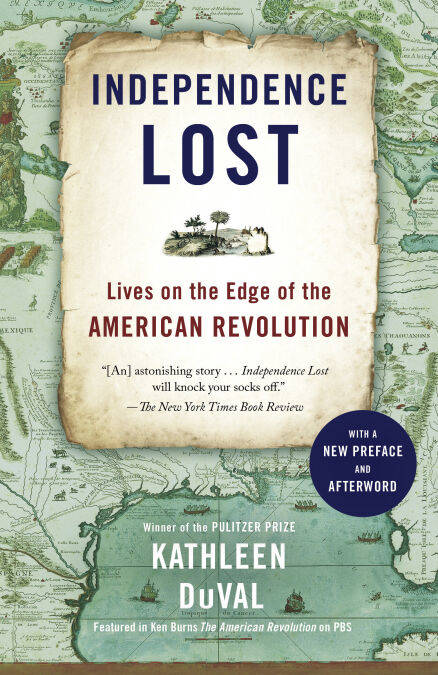
Independence Lost E-BOOK
Lives on the Edge of the American Revolution
Kathleen DuVal
E-book | Engels
€ 15,02
+ 15 punten
Omschrijving
A Pulitzer Prize–winning historian tells the “astonishing” (The New York Times Book Review) story of the Revolutionary War through the eyes of the outsiders of colonial society—including enslaved people, American Indians, women, and British loyalists—in a revised edition with a new preface and afterword.
**Kathleen DuVal is featured in the new Ken Burns documentary The American Revolution.**
Winner of the Journal of the American Revolution Book of the Year Award • Winner of the Society of the Cincinnati in the State of New Jersey History Prize • Finalist for the George Washington Book Prize
Over the last decade, Kathleen DuVal has revitalized the study of early America’s marginalized voices. Here, she recounts an untold story as significant as that of the Founding Fathers: the history of the Revolutionary Era as experienced by those living on Florida’s Gulf Coast.
While citizens of the thirteen rebelling colonies came to blows with the British Empire over tariffs and parliamentary representation, the situation on the rest of the continent was even more fraught. In the Gulf of Mexico, Spanish forces clashed with Britain’s strained army to carve up the Gulf Coast, as both sides competed for allegiances with the powerful Chickasaw, Choctaw, and Creek nations who inhabited the region. Meanwhile, African American slaves had little control over their own lives, but some individuals found opportunities to expand their freedoms.
Independence Lost reveals that individual motives counted as much as the ideals of liberty and freedom the Founders espoused: Independence had a personal as well as national meaning. The choices of individuals outside the colonies were crucial to the war's outcome. DuVal introduces us to the Mobile slave Petit Jean, who organized militias to fight the British at sea; the Chickasaw diplomat Payamataha, who worked to keep his people out of war; New Orleans merchant Oliver Pollock and his wife, who organized funds and garnered Spanish support for the American Revolution; and the half-Scottish-Creek leader Alexander McGillivray, who fought to protect indigenous interests from imperial encroachment. Their lives illuminate the fateful events along the Gulf of Mexico that changed the history of North America itself.
**Kathleen DuVal is featured in the new Ken Burns documentary The American Revolution.**
Winner of the Journal of the American Revolution Book of the Year Award • Winner of the Society of the Cincinnati in the State of New Jersey History Prize • Finalist for the George Washington Book Prize
Over the last decade, Kathleen DuVal has revitalized the study of early America’s marginalized voices. Here, she recounts an untold story as significant as that of the Founding Fathers: the history of the Revolutionary Era as experienced by those living on Florida’s Gulf Coast.
While citizens of the thirteen rebelling colonies came to blows with the British Empire over tariffs and parliamentary representation, the situation on the rest of the continent was even more fraught. In the Gulf of Mexico, Spanish forces clashed with Britain’s strained army to carve up the Gulf Coast, as both sides competed for allegiances with the powerful Chickasaw, Choctaw, and Creek nations who inhabited the region. Meanwhile, African American slaves had little control over their own lives, but some individuals found opportunities to expand their freedoms.
Independence Lost reveals that individual motives counted as much as the ideals of liberty and freedom the Founders espoused: Independence had a personal as well as national meaning. The choices of individuals outside the colonies were crucial to the war's outcome. DuVal introduces us to the Mobile slave Petit Jean, who organized militias to fight the British at sea; the Chickasaw diplomat Payamataha, who worked to keep his people out of war; New Orleans merchant Oliver Pollock and his wife, who organized funds and garnered Spanish support for the American Revolution; and the half-Scottish-Creek leader Alexander McGillivray, who fought to protect indigenous interests from imperial encroachment. Their lives illuminate the fateful events along the Gulf of Mexico that changed the history of North America itself.
Specificaties
Betrokkenen
- Auteur(s):
- Uitgeverij:
Inhoud
- Aantal bladzijden:
- 480
- Taal:
- Engels
Eigenschappen
- Productcode (EAN):
- 9781588369611
- Verschijningsdatum:
- 6/07/2015
- Uitvoering:
- E-book
- Beveiligd met:
- Adobe DRM
- Formaat:
- ePub


Alleen bij Standaard Boekhandel
+ 15 punten op je klantenkaart van Standaard Boekhandel
Cadeau

AANGERADEN


Beoordelingen
We publiceren alleen reviews die voldoen aan de voorwaarden voor reviews. Bekijk onze voorwaarden voor reviews.