


- Afhalen na 1 uur in een winkel met voorraad
- Gratis thuislevering in België vanaf € 30
- Ruim aanbod met 7 miljoen producten
- Afhalen na 1 uur in een winkel met voorraad
- Gratis thuislevering in België vanaf € 30
- Ruim aanbod met 7 miljoen producten





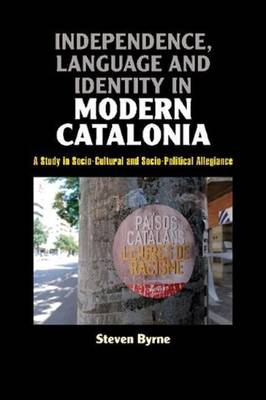
Independence, Language and Identity in Modern Catalonia
Byrne
€ 55,95
+ 111 punten
Eenvoudig bestellen
Veilig betalen


Gratis thuislevering vanaf € 30 (via bpost)
Gratis levering in je Standaard Boekhandel
Omschrijving
The processes associated with globalisation have seen Catalonia become an increasingly ethnolinguistically diverse region. A vibrant civic and political movement for an independence has brought a renewed urgency to questions about what it means, personally and politically, to speak or not to speak Catalan or Spanish in 21st century Catalonia. This book examines the attitudes of members of independence organisations toward the Catalan and Spanish languages against the backdrop of the independence movement. A multifaceted socio-political and socio-cultural situation is reflected in what speakers think about the languages, how they perceive them and how understanding this can reveal the complex configuration of language and identity politics. Research using focus groups and narrative interviews was conducted with members of independence organisations operating in the Catalan city of Girona. Analysis of the data reveals a diversity of attitudes toward both Catalan and Spanish, with both languages being mobilised in diverse combinations for a wide range of purposes. Qualitative methodology revealed the ways in which Catalan and Spanish are currently being practised, and the symbolic and functional role the languages play in articulating a sense of modern-day Catalan identity. Respondents indicate that, against the backdrop of the independence process in the region, globalisation and migration, bilingualism and multilingualism, have become highly valued in modern Catalonia for a myriad of different reasons. Research findings bring to the fore the complex matrix of political, ethnic and linguistic allegiance which has important implications for similar national independence situations in the rest of the world. Published in association with the Canada Blanch Centre for Contemporary Spanish Studies
Specificaties
Betrokkenen
- Auteur(s):
- Uitgeverij:
Inhoud
- Aantal bladzijden:
- 196
- Taal:
- Engels
- Reeks:
Eigenschappen
- Productcode (EAN):
- 9781789760712
- Verschijningsdatum:
- 1/09/2022
- Uitvoering:
- Paperback
- Formaat:
- Trade paperback (VS)
- Afmetingen:
- 152 mm x 229 mm
- Gewicht:
- 272 g


Alleen bij Standaard Boekhandel
+ 111 punten op je klantenkaart van Standaard Boekhandel
CADEAU

AANGERADEN


Beoordelingen
We publiceren alleen reviews die voldoen aan de voorwaarden voor reviews. Bekijk onze voorwaarden voor reviews.