


- Afhalen na 1 uur in een winkel met voorraad
- Gratis thuislevering in België vanaf € 30
- Ruim aanbod met 7 miljoen producten
- Afhalen na 1 uur in een winkel met voorraad
- Gratis thuislevering in België vanaf € 30
- Ruim aanbod met 7 miljoen producten





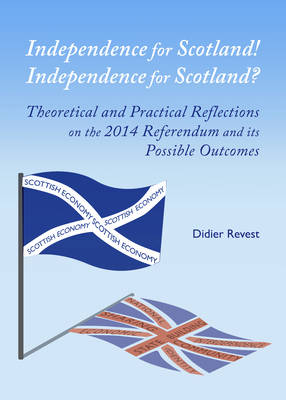
Independence for Scotland! Independence for Scotland?
Theoretical and Practical Reflections on the 2014 Referendum and Its Possible Outcomes
Didier Revest
Hardcover | Engels
€ 59,45
+ 118 punten
Omschrijving
In March 2013, Scottish First Minister Alex Salmond announced that the long-awaited referendum on Scottish independence would take place on 18 September 2014. More often than not, those in favour of an independent Scotland present their fight as a constitutional means to a socio-economic end. In the words of Alex Salmond himself: "Progress to independence. Not for its own sake, not 'let's be independent so we can hoist the Saltire'. Let's be independent so we can better the lives of the Scottish people." (quoted by Tom Peterkin, Alex Salmond: 'I'd be a labourer if it wasn't for Mum' - Scotland on Sunday, 16 January 2011) If, as suggested by the quote, breaking with the rest of the UK automatically means improved socio-economic performance, one consequently has to accept that there is only one constraint weighing Scotland down, and that it is the Union. However, is it all really that simple? Another commonly overlooked difficulty is that independence - that is to say, a Scottish state for a Scottish nation - inevitably goes hand in hand with a redefinition of national solidarity within a strictly Scottish context. This begs the question: how do Nationalists justify this redefinition when their country has been an integral part of a particularly fluid group of nations since the early 18th century? The last delicate issue raised by the Scottish referendum has to do with state building and the Nationalists' heavy reliance on the promotion of civic nationalism despite the notion's inherent limits.
Specificaties
Betrokkenen
- Auteur(s):
- Uitgeverij:
Inhoud
- Aantal bladzijden:
- 185
- Taal:
- Engels
Eigenschappen
- Productcode (EAN):
- 9781443858304
- Verschijningsdatum:
- 28/05/2014
- Uitvoering:
- Hardcover
- Formaat:
- Genaaid
- Afmetingen:
- 152 mm x 208 mm
- Gewicht:
- 417 g


Alleen bij Standaard Boekhandel
+ 118 punten op je klantenkaart van Standaard Boekhandel
CADEAU

AANGERADEN


Beoordelingen
We publiceren alleen reviews die voldoen aan de voorwaarden voor reviews. Bekijk onze voorwaarden voor reviews.