


- Afhalen na 1 uur in een winkel met voorraad
- Gratis thuislevering in België vanaf € 30
- Ruim aanbod met 7 miljoen producten
- Afhalen na 1 uur in een winkel met voorraad
- Gratis thuislevering in België vanaf € 30
- Ruim aanbod met 7 miljoen producten





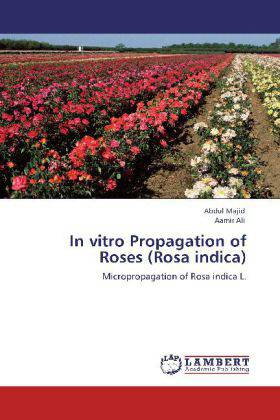
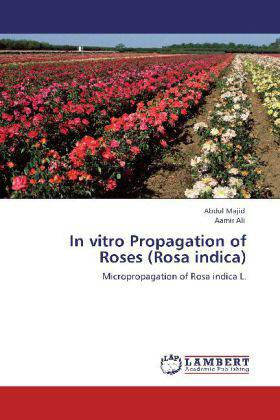
In vitro Propagation of Roses (Rosa indica)
Micropropagation of Rosa indica L.
Abdul Majid, Aamir Ali
Paperback | Engels
€ 58,45
+ 116 punten
Omschrijving
Rose is generally propagated by vegetative methods like cutting, budding and grafting. Seeds are also used for propagation of species, new cultivars and for production of rootstocks. Although propagation by vegetative ways is a predominant technique in roses, yet it does not ensure healthy and disease-free plants. In addition many rosaceaeous plants of ornamental merit are difficult and slow to propagate from cuttings. Moreover, plants once infected by pathogens can transmit it generation after generation. These inefficient multiplication methods have long been a serious problem in rose breeding program in Pakistan. Plant Tissue Culture offers an alternative method of multiplication. Significant features of in vitro propagation are its enormous multiplication capacity in relatively shorter span of time, production of disease free and premium quality plating material and ability to regenerate planting material round the year. Hence, optimization of culture conditions for micropropagation of Roses for commercial exploitation to get great number of disease free plants in shorter period of time with high uniformity is inevitable.
Specificaties
Betrokkenen
- Auteur(s):
- Uitgeverij:
Inhoud
- Aantal bladzijden:
- 124
- Taal:
- Engels
Eigenschappen
- Productcode (EAN):
- 9783848427888
- Verschijningsdatum:
- 6/04/2012
- Uitvoering:
- Paperback
- Afmetingen:
- 149 mm x 219 mm
- Gewicht:
- 187 g


Alleen bij Standaard Boekhandel
+ 116 punten op je klantenkaart van Standaard Boekhandel
Cadeau

AANGERADEN


Beoordelingen
We publiceren alleen reviews die voldoen aan de voorwaarden voor reviews. Bekijk onze voorwaarden voor reviews.