


- Afhalen na 1 uur in een winkel met voorraad
- Gratis thuislevering in België vanaf € 30
- Ruim aanbod met 7 miljoen producten
- Afhalen na 1 uur in een winkel met voorraad
- Gratis thuislevering in België vanaf € 30
- Ruim aanbod met 7 miljoen producten





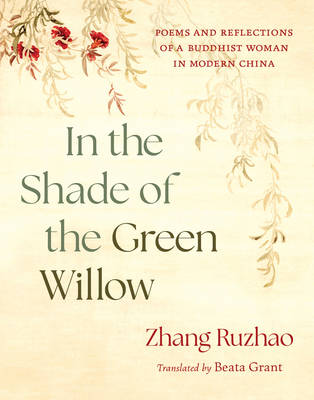
In the Shade of the Green Willow
Poems and Reflections of a Buddhist Woman in Modern China
Zhang Ruzhao
Paperback | Engels
€ 27,95
+ 55 punten
Omschrijving
Through verse, the rural world becomes the landscape for a woman's resolute spiritual quest, set against the restless currents of twentieth-century China. Twentieth-century China was rife with political and spiritual turmoil as it sought to shake off the shackles of its imperial past and move along the path of modernization. In the midst of this turmoil, Zhang Ruzhao (later ordained as Tiantai Master Benkong)--a prolific Buddhist, feminist, literary, and political figure--became disillusioned with wha, t for her, seemed a mindless and self-interested embrace of change for the sake of change. To put into practice her exploration of Buddhist and Chinese philosophical teachings, Zhang acquired a small piece of mountainside property in 1929, turning it into a hermitage where she could engage in deep and intensive study, Buddhist practice, and self-sufficiency. It was at this hermitage that she composed an account of her life, recording her process of clearing the ground, planting trees and vegetable gardens, repairing walls, and building a modest place to live and practice. Translated beautifully in its thought-provoking simplicity by Beata Grant, Zhang's account is written using an interweaving of prose and short four-line poems, an emulation of the long-observed Chinese tradition of poets and intellectuals living in rural retreats, notably all of which were men. This collection offers a unique perspective on this tradition from an independent and largely solitary woman during a time marked by a radical reassessment, and often rejection, of many of the traditions of the nation's imperial past. Zhang's writings provide us with an extraordinary glimpse into one woman's determination to pursue an urgent spiritual and religious quest amidst the turbulence of her times. Her contemplations, exceedingly relevant, offer solace and solidarity to readers facing an increasingly busy, confusing, volatile, and change-focused world.
Specificaties
Betrokkenen
- Auteur(s):
- Vertaler(s):
- Uitgeverij:
Inhoud
- Aantal bladzijden:
- 144
- Taal:
- Engels
Eigenschappen
- Productcode (EAN):
- 9781645474807
- Verschijningsdatum:
- 10/11/2026
- Uitvoering:
- Paperback
- Formaat:
- Trade paperback (VS)
- Afmetingen:
- 140 mm x 178 mm
- Gewicht:
- 367 g


Alleen bij Standaard Boekhandel
+ 55 punten op je klantenkaart van Standaard Boekhandel
Cadeau

AANGERADEN


Beoordelingen
We publiceren alleen reviews die voldoen aan de voorwaarden voor reviews. Bekijk onze voorwaarden voor reviews.