


- Afhalen na 1 uur in een winkel met voorraad
- Gratis thuislevering in België vanaf € 30
- Ruim aanbod met 7 miljoen producten
- Afhalen na 1 uur in een winkel met voorraad
- Gratis thuislevering in België vanaf € 30
- Ruim aanbod met 7 miljoen producten





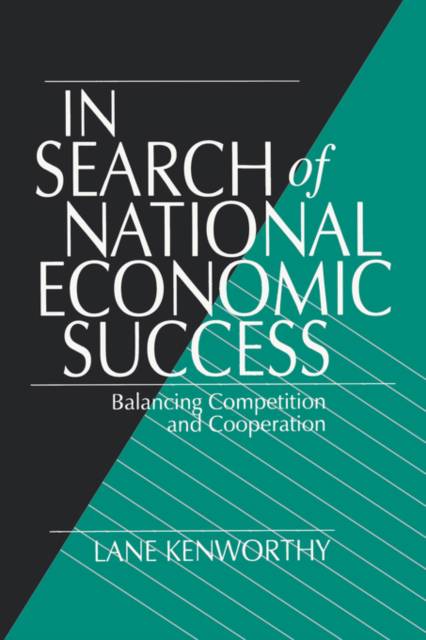
In Search of National Economic Success
Balancing Competition and Cooperation
Lane Kenworthy
Paperback | Engels
€ 177,45
+ 354 punten
Uitvoering
Omschrijving
Recent work in comparative political economy has generated a host of alternative explanations for variation in national economic performance--institutional sclerosis, flexible specialization, governance relations, etc. In each case, these explanations have trouble accounting for more than a handful of instances. In Search of National Economic Success uses detailed case studies with statistical analysis to comparatively assess the "market liberal" belief in free markets, limited government, and the tradeoff between economic efficiency and social justice. Lane Kenworthy argues that the key to economic success lies in combining competition with cooperation. Among advanced industrialized nations, the countries achieving the best economic performance results over the past three decades have been the most committed to combining competition and cooperation. Those faring the worst rely predominantly on atomistic, individualistic competition. In the end, the comparative record strongly supports a focus on cooperation-inducing institutions. This volume will prove invaluable to scholars and students in comparative politics, international political economy, and comparative economics. "[This volume] presents an alternative explanation of the cross-national variation in performance, arguing that national economic success lies in combining competition with cooperation." --Journal of Economic Literature
Specificaties
Betrokkenen
- Auteur(s):
- Uitgeverij:
Inhoud
- Aantal bladzijden:
- 288
- Taal:
- Engels
Eigenschappen
- Productcode (EAN):
- 9780803971615
- Verschijningsdatum:
- 1/05/1995
- Uitvoering:
- Paperback
- Formaat:
- Trade paperback (VS)
- Afmetingen:
- 152 mm x 227 mm
- Gewicht:
- 462 g


Alleen bij Standaard Boekhandel
+ 354 punten op je klantenkaart van Standaard Boekhandel

Beoordelingen
We publiceren alleen reviews die voldoen aan de voorwaarden voor reviews. Bekijk onze voorwaarden voor reviews.