


- Afhalen na 1 uur in een winkel met voorraad
- Gratis thuislevering in België vanaf € 30
- Ruim aanbod met 7 miljoen producten
- Afhalen na 1 uur in een winkel met voorraad
- Gratis thuislevering in België vanaf € 30
- Ruim aanbod met 7 miljoen producten





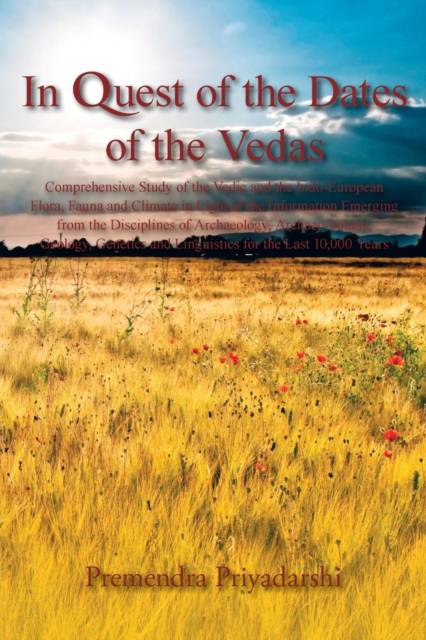
In Quest of the Dates of the Vedas
Comprehensive Study of the Vedic and the Indo-European Flora, Fauna and Climate in Light of the Information Emergi
Premendra Priyadarshi
Paperback | Engels
€ 16,95
+ 33 punten
Omschrijving
The dates of the four Vedas, as well as the homeland of the Indo-European-speaking people, have been two unresolved issues in the Indian history. This book uses the robust information recently emerging from archaeo-botanical studies, particularly palinology, as well as that originating from the researches in geology, archaeology, and genetics. The information generated from these scientific studies provides a vivid picture of the last ten thousand years of Europe and Asia. This picture has been matched against the information about the plants, animals, and climate contained in the four Vedic Samhitas, as well as that emerging from the philological studies. The final picture emerges that the Rig-Veda was composed between 8000 BC and 6000 BC, Sama-Veda between 6000 BC and 5500 BC, Yajur-Veda between 5500 BC and 2500 BC, or perhaps 2000 BC, and the Atharva-Veda between 1500BC and 1300 BC. The investigation also reveals that the Indo-European words for "lion" ("kesari," "singh"), "camel" ("ustra," "ostrich"), "opium," "lotus," etc., characteristically Indian animals and plants, have existed in the Indo-European vocabulary, although not noticed so far. That exercise fixes the location of the Indo-European homeland in Northwest India at about 10,000-8,000 BC.
Specificaties
Betrokkenen
- Auteur(s):
- Uitgeverij:
Inhoud
- Aantal bladzijden:
- 460
- Taal:
- Engels
Eigenschappen
- Productcode (EAN):
- 9781482834253
- Verschijningsdatum:
- 2/09/2014
- Uitvoering:
- Paperback
- Formaat:
- Trade paperback (VS)
- Afmetingen:
- 152 mm x 229 mm
- Gewicht:
- 607 g


Alleen bij Standaard Boekhandel
+ 33 punten op je klantenkaart van Standaard Boekhandel

Beoordelingen
We publiceren alleen reviews die voldoen aan de voorwaarden voor reviews. Bekijk onze voorwaarden voor reviews.