



Je cadeautjes zeker op tijd in huis hebben voor de feestdagen? Kom langs in onze winkels en vind het perfecte geschenk!
- Afhalen na 1 uur in een winkel met voorraad
- Gratis thuislevering in België vanaf € 30
- Ruim aanbod met 7 miljoen producten
Je cadeautjes zeker op tijd in huis hebben voor de feestdagen? Kom langs in onze winkels en vind het perfecte geschenk!
- Afhalen na 1 uur in een winkel met voorraad
- Gratis thuislevering in België vanaf € 30
- Ruim aanbod met 7 miljoen producten





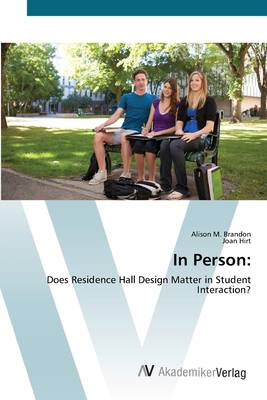
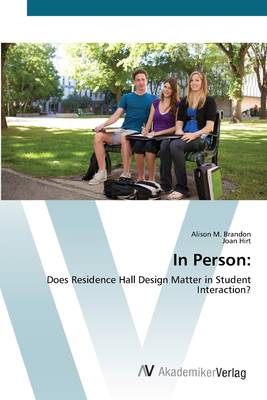
In Person
Does Residence Hall Design Matter in Student Interaction?
Alison M Brandon, Joan Hirt
Paperback | Engels
€ 54,36
+ 108 punten
Omschrijving
Revision with unchanged content. Student persistence has long been valued by higher education (Glynn, Sauer, & Miller, 2003). Student interaction significantly impacts persistence rates (Tinto, 1975). The environment has a major influence on how students interact (Lewin, 1936). One way in which the environment influences interactions is by a building design (Strange & Banning, 2001), including residence hall design. Despite theories that building design impacts interactions, there is little research that explores how student interaction is influenced as a result of residence hall design.The purpose of this study was to understand how residence hall spaces that differ by architectural style impact college student interaction. Specifically, this study examined interactions that took place among residents in traditional and suite style residence halls. This book is addressed to college student affairs administrators; specifically those working with residence hall communities, as well as those who develop residence halls or other campus facilities. It is also addressed to architects and interior designers who work with institutions of higher learning through the design or renovation process of residence halls.
Specificaties
Betrokkenen
- Auteur(s):
- Uitgeverij:
Inhoud
- Aantal bladzijden:
- 116
- Taal:
- Engels
Eigenschappen
- Productcode (EAN):
- 9783639422207
- Verschijningsdatum:
- 1/06/2012
- Uitvoering:
- Paperback
- Formaat:
- Trade paperback (VS)
- Afmetingen:
- 152 mm x 229 mm
- Gewicht:
- 181 g


Alleen bij Standaard Boekhandel
+ 108 punten op je klantenkaart van Standaard Boekhandel
CADEAU


Beoordelingen
We publiceren alleen reviews die voldoen aan de voorwaarden voor reviews. Bekijk onze voorwaarden voor reviews.