


- Afhalen na 1 uur in een winkel met voorraad
- Gratis thuislevering in België vanaf € 30
- Ruim aanbod met 7 miljoen producten
- Afhalen na 1 uur in een winkel met voorraad
- Gratis thuislevering in België vanaf € 30
- Ruim aanbod met 7 miljoen producten





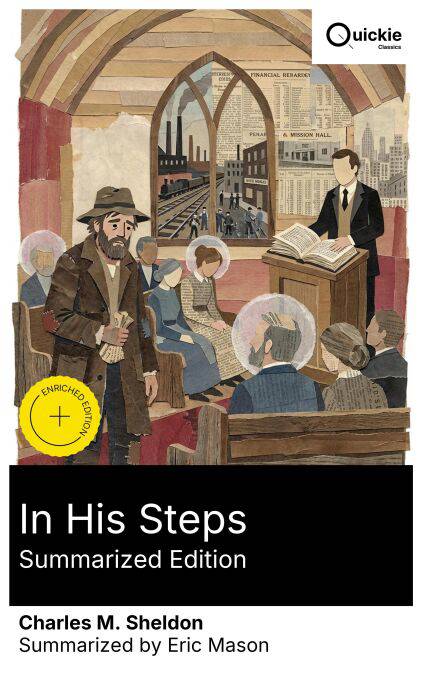
In His Steps (Summarized Edition) E-BOOK
Enriched edition. Rev. Henry Maxwell's 'What Would Jesus Do' challenge in a railroad town and Chicago, a religious novel of moral choices and social responsibility
Charles M. Sheldon
E-book | Engels
€ 1,99
+ 1 punten
Eenvoudig bestellen
Veilig betalen


Onmiddellijk geleverd via e-mail
Omschrijving
In His Steps (1896) dramatizes the question "What Would Jesus Do?" When a destitute stranger confronts complacent parishioners in Raymond, Rev. Henry Maxwell calls them to vow for a year to test every decision by Jesus' example. Through linked episodes—from a star singer's sacrifice to a newspaper's ethical overhaul and urban mission—the novel blends didactic narrative and Social Gospel critique of Gilded Age capitalism and labor. Its episodic form, pulpit-toned narration, and stress on communal discipleship align it with reform fiction of the Progressive Era. Sheldon, a Congregational minister in Topeka, Kansas, wrote from pastoral experience among the poor and from experiments in applying Christian ethics to journalism (famously editing a daily paper under Christian principles). Steeped in revivalist rhetoric and the emerging Social Gospel, he sought to move religion from private piety to public ethics, crafting fiction as a sermon in action. Readers of religious history, ethics, and American literature will find in this novel a lucid primer on the Social Gospel's demands and possibilities. It is recommended for book groups, clergy, reform-minded professionals, and skeptics alike, for its simple prose conceals a provocative program: an invitation to audit one's life—budgets, ballots, and business—by the standard of discipleship.
Quickie Classics summarizes timeless works with precision, preserving the author's voice and keeping the prose clear, fast, and readable—distilled, never diluted. Enriched Edition extras: Introduction · Synopsis · Historical Context · Brief Analysis · 4 Reflection Q&As · Editorial Footnotes.
Quickie Classics summarizes timeless works with precision, preserving the author's voice and keeping the prose clear, fast, and readable—distilled, never diluted. Enriched Edition extras: Introduction · Synopsis · Historical Context · Brief Analysis · 4 Reflection Q&As · Editorial Footnotes.
Specificaties
Betrokkenen
- Auteur(s):
- Uitgeverij:
Inhoud
- Aantal bladzijden:
- 116
- Taal:
- Engels
Eigenschappen
- Productcode (EAN):
- 8596547879046
- Verschijningsdatum:
- 9/01/2026
- Uitvoering:
- E-book
- Beveiligd met:
- Digital watermarking
- Formaat:
- ePub


Alleen bij Standaard Boekhandel
+ 1 punten op je klantenkaart van Standaard Boekhandel
CADEAU

AANGERADEN


Beoordelingen
We publiceren alleen reviews die voldoen aan de voorwaarden voor reviews. Bekijk onze voorwaarden voor reviews.