


- Afhalen na 1 uur in een winkel met voorraad
- Gratis thuislevering in België vanaf € 30
- Ruim aanbod met 7 miljoen producten
- Afhalen na 1 uur in een winkel met voorraad
- Gratis thuislevering in België vanaf € 30
- Ruim aanbod met 7 miljoen producten





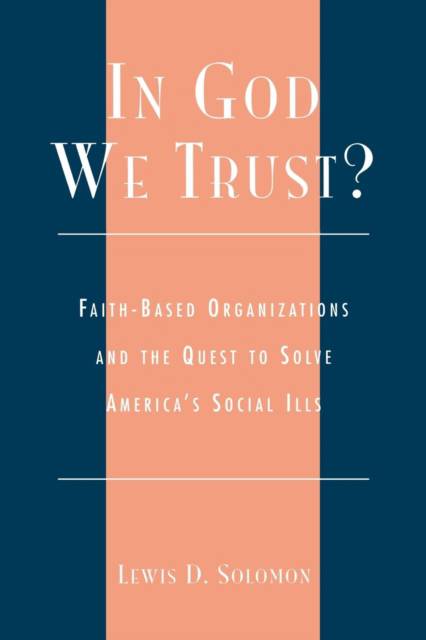
In God We Trust?
Faith-Based Organizations and the Quest to Solve America's Social Ills
€ 98,45
+ 196 punten
Omschrijving
This pioneering book charts how President George W. Bush's 'compassionate conservatism' creates a new path for American Social Policy. There is a growing interest in testing the proposition that faith-based organizations (FBOs) could do even greater good, especially if government supports an expanded role. The organizations represent a potentially valuable, but controversial, resource because they offer to fight a very different war against America's social ills. This work offers three conclusions. First, FBOs are effective in dealing with chronic social problems because they spark personal transformation. Second, financing them through the Tax Code or vouchers is preferable to direct federal funding. The fear that public funding means government take-over of religion serves as perhaps the greatest impediment to a more expansive role for FBOs. Third, although predicting the U.S. Supreme Court's resolution of church-state issues is fraught with difficulties, the emerging 'equal treatment' of religion by the High Court suggests a more permissive attitude toward the federal funding of religous charities. The tax and voucher alternatives seem certain to pass constitutional muster. In God We Trust? is among the first works to assess President Bush's policy efforts to meet America's social ills by turning more tasks over to FBOs. In addition to demonstrating the constitutionality of the federal efforts to fund FBOs, the book analytically summarizes the existing empirical evidence dealing with the effectiveness of faith-based organizations.
Specificaties
Betrokkenen
- Uitgeverij:
Inhoud
- Aantal bladzijden:
- 304
- Taal:
- Engels
- Reeks:
Eigenschappen
- Productcode (EAN):
- 9780739124208
- Verschijningsdatum:
- 1/09/2007
- Uitvoering:
- Paperback
- Formaat:
- Trade paperback (VS)
- Afmetingen:
- 159 mm x 228 mm
- Gewicht:
- 780 g


Alleen bij Standaard Boekhandel
+ 196 punten op je klantenkaart van Standaard Boekhandel
Cadeau

AANGERADEN


Beoordelingen
We publiceren alleen reviews die voldoen aan de voorwaarden voor reviews. Bekijk onze voorwaarden voor reviews.