


- Afhalen na 1 uur in een winkel met voorraad
- Gratis thuislevering in België vanaf € 30
- Ruim aanbod met 7 miljoen producten
- Afhalen na 1 uur in een winkel met voorraad
- Gratis thuislevering in België vanaf € 30
- Ruim aanbod met 7 miljoen producten





€ 39,45
+ 78 punten
Omschrijving
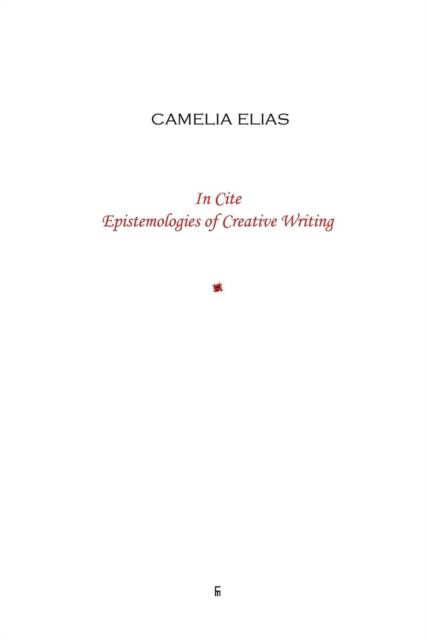
The epistemic creative writer is not merely an expressive writer, a writer who writes for creative writing programs at diverse university colleges. Rather, the epistemic creative writer is the writer who understands that in order to say something useful you must step out of the space that engages your ego. Awareness of what really matters comes from the contemplation of the futility of words. Before the word there is silence. After the word there is silence. But during the word there is knowledge that can be made crystal clear. This book is about extracting what writing means to a few writers who formulate ideas about creative writing without, however, making claims to instruction. Can creative writing that produces knowledge be taught without a method? Samuel Beckett, Raymond Federman, Gertrude Stein, Jacques Lacan, Frank O'Hara, Douglas Hofstadter, Brian Rotman, Herman Melville, Kathy Acker, Friedrich Nietzsche, David Markson, Andrei Codrescu, and a host of others, gather here to offer an answer. -- "Camelia Elias speaks to the reader from that place where the language of the birds becomes the language of silence." (Patrick Blackburn, Professor of Formal Logic, Roskilde University)
Specificaties
Betrokkenen
- Auteur(s):
- Uitgeverij:
Inhoud
- Aantal bladzijden:
- 308
- Taal:
- Engels
Eigenschappen
- Productcode (EAN):
- 9788792633330
- Verschijningsdatum:
- 11/03/2013
- Uitvoering:
- Paperback
- Formaat:
- Trade paperback (VS)
- Afmetingen:
- 152 mm x 229 mm
- Gewicht:
- 453 g


Alleen bij Standaard Boekhandel
+ 78 punten op je klantenkaart van Standaard Boekhandel
Cadeau

AANGERADEN


Beoordelingen
We publiceren alleen reviews die voldoen aan de voorwaarden voor reviews. Bekijk onze voorwaarden voor reviews.