


- Afhalen na 1 uur in een winkel met voorraad
- Gratis thuislevering in België vanaf € 30
- Ruim aanbod met 7 miljoen producten
- Afhalen na 1 uur in een winkel met voorraad
- Gratis thuislevering in België vanaf € 30
- Ruim aanbod met 7 miljoen producten





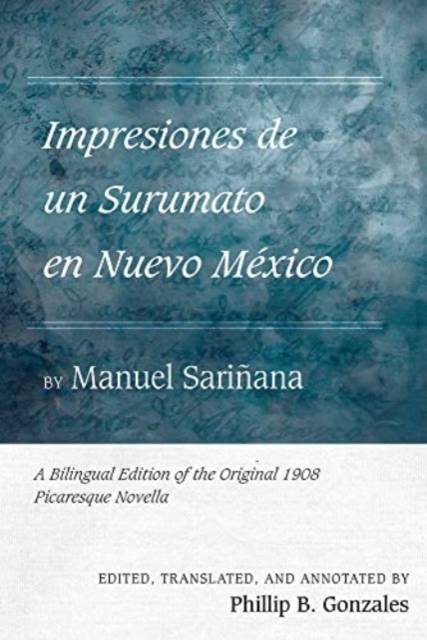
Impresiones de Un Surumato En Nuevo México by Manuel Sariñana
A Bilingual Edition of the Original 1908 Picaresque Novella
Phillip B Gonzales
€ 127,45
+ 254 punten
Omschrijving
Impresiones de un Surumato en Nuevo México by Manuel Sariñana represents a remarkable literary recovery. For the first time, the novella is presented in its original Spanish and in English, painstakingly translated and annotated by Phillip B. Gonzales.
Manuel Sariñana came to the New Mexico territory from Mexico to work as a Spanish-language journalist. While covering politics, he wrote and published Impresiones de un Surumato en Nuevo México as a picaresque work, a common genre in Mexico that uses satire to narrate a drama based on concrete social issues in the author's immediate vicinity. In his preface, Sariñana makes his intent clear: to address the unseemly manner in which New Mexico's Democratic Party attempts to gain leverage in elections. But, in a caricature of two immigrant peons, he surreptitiously takes to task how nuevomexicanos look down on people from Mexico.
Gonzales provides a critical introduction, an interpretation of Sariñana's piece, and a historical framework to contextualize the author's experiences and the events alluded to in the novella. The result brings this important work of fiction and its sociopolitical background to a new generation of readers.
Manuel Sariñana came to the New Mexico territory from Mexico to work as a Spanish-language journalist. While covering politics, he wrote and published Impresiones de un Surumato en Nuevo México as a picaresque work, a common genre in Mexico that uses satire to narrate a drama based on concrete social issues in the author's immediate vicinity. In his preface, Sariñana makes his intent clear: to address the unseemly manner in which New Mexico's Democratic Party attempts to gain leverage in elections. But, in a caricature of two immigrant peons, he surreptitiously takes to task how nuevomexicanos look down on people from Mexico.
Gonzales provides a critical introduction, an interpretation of Sariñana's piece, and a historical framework to contextualize the author's experiences and the events alluded to in the novella. The result brings this important work of fiction and its sociopolitical background to a new generation of readers.
Specificaties
Betrokkenen
- Auteur(s):
- Vertaler(s):
- Uitgeverij:
Inhoud
- Aantal bladzijden:
- 256
- Taal:
- Engels
- Reeks:
Eigenschappen
- Productcode (EAN):
- 9780826365606
- Verschijningsdatum:
- 15/11/2023
- Uitvoering:
- Hardcover
- Formaat:
- Genaaid
- Afmetingen:
- 152 mm x 229 mm
- Gewicht:
- 571 g


Alleen bij Standaard Boekhandel
+ 254 punten op je klantenkaart van Standaard Boekhandel
CADEAU


Beoordelingen
We publiceren alleen reviews die voldoen aan de voorwaarden voor reviews. Bekijk onze voorwaarden voor reviews.