


- Afhalen na 1 uur in een winkel met voorraad
- Gratis thuislevering in België vanaf € 30
- Ruim aanbod met 7 miljoen producten
- Afhalen na 1 uur in een winkel met voorraad
- Gratis thuislevering in België vanaf € 30
- Ruim aanbod met 7 miljoen producten





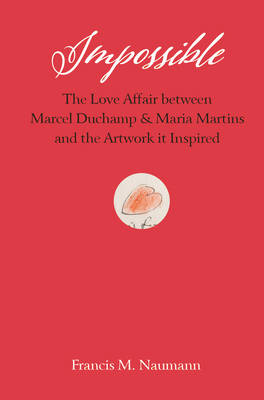
Impossible
The Love Affair Between Marcel Duchamp and Maria Martins, and the Artwork It Inspired
Francis M Naumann
Hardcover | Engels
€ 36,95
+ 73 punten
Omschrijving
"Tell me who your enemies are, so that I can help you to hate them." This was a favorite line of the Brazilian sculptor Maria Martins (1894-1973), and likely how she greeted Marcel Duchamp (1887-1968) at their first meeting, at the opening of an exhibition of her work in 1943.
The clandestine love affair that burned between these two artists for the remainder of the decade was fueled not only by romantic passion but also by a deep appreciation of each other's work. Some of the greatest of Martins's Surrealist sculptures were inspired by her relationship with Duchamp--including Impossible, whose title perhaps refers to their situation. (Martins was married to the Brazilian ambassador to the United States.) And it was during their affair that Duchamp--widely believed to have "retired" from art--secretly began his astonishing final work, which would be revealed only after his death. This work, the sculptural tableau Étant donnés, was heavily influenced by Martins: it takes formal cues from her work, and it was she who modeled for the startlingly realistic nude at its center.
This surprising story--highly readable yet meticulously researched, and abundantly illustrated with artworks and archival images--will affirm the importance of Maria Martins's tropically inflected Surrealism and challenge the perception of Duchamp as a purely cool and cerebral artist.
The clandestine love affair that burned between these two artists for the remainder of the decade was fueled not only by romantic passion but also by a deep appreciation of each other's work. Some of the greatest of Martins's Surrealist sculptures were inspired by her relationship with Duchamp--including Impossible, whose title perhaps refers to their situation. (Martins was married to the Brazilian ambassador to the United States.) And it was during their affair that Duchamp--widely believed to have "retired" from art--secretly began his astonishing final work, which would be revealed only after his death. This work, the sculptural tableau Étant donnés, was heavily influenced by Martins: it takes formal cues from her work, and it was she who modeled for the startlingly realistic nude at its center.
This surprising story--highly readable yet meticulously researched, and abundantly illustrated with artworks and archival images--will affirm the importance of Maria Martins's tropically inflected Surrealism and challenge the perception of Duchamp as a purely cool and cerebral artist.
Specificaties
Betrokkenen
- Auteur(s):
- Uitgeverij:
Inhoud
- Aantal bladzijden:
- 192
- Taal:
- Engels
Eigenschappen
- Productcode (EAN):
- 9780789215291
- Verschijningsdatum:
- 31/03/2026
- Uitvoering:
- Hardcover
- Formaat:
- Genaaid
- Afmetingen:
- 142 mm x 218 mm
- Gewicht:
- 476 g


Alleen bij Standaard Boekhandel
+ 73 punten op je klantenkaart van Standaard Boekhandel
Cadeau

AANGERADEN


Beoordelingen
We publiceren alleen reviews die voldoen aan de voorwaarden voor reviews. Bekijk onze voorwaarden voor reviews.