


- Afhalen na 1 uur in een winkel met voorraad
- Gratis thuislevering in België vanaf € 30
- Ruim aanbod met 7 miljoen producten
- Afhalen na 1 uur in een winkel met voorraad
- Gratis thuislevering in België vanaf € 30
- Ruim aanbod met 7 miljoen producten





Omschrijving
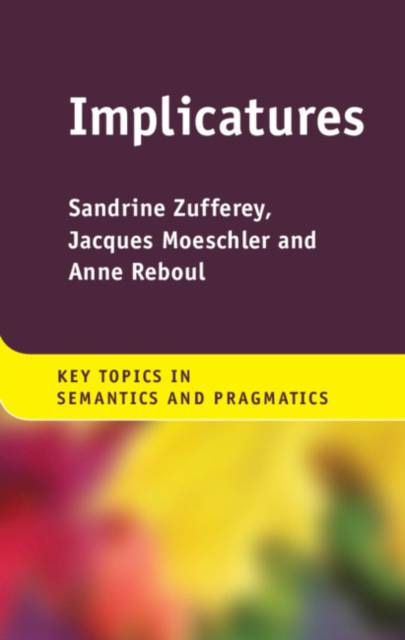
An accessible and thorough introduction to implicatures, a key topic in all frameworks of pragmatics. Starting with a definition of the various types of implicatures in Gricean, neo-Gricean and post-Gricean pragmatics, the book covers many important questions for current pragmatic theories, namely: the distinction between explicit and implicit forms of pragmatic enrichment, the criteria for drawing a line between semantic and pragmatic meaning, the relations between the structure of language (syntax) and its use (pragmatics), the social and cognitive factors underlying the use of implicatures by native speakers, and the factors influencing their acquisition for children and second language learners. Written in non-technical language, Implicatures will appeal to students and teachers in linguistics, applied linguistics, psychology and sociology, who are interested in how language is used for communication, and how children and learners develop pragmatic skills.
Specificaties
Betrokkenen
- Auteur(s):
- Uitgeverij:
Inhoud
- Aantal bladzijden:
- 264
- Taal:
- Engels
- Reeks:
Eigenschappen
- Productcode (EAN):
- 9781107125650
- Verschijningsdatum:
- 13/06/2019
- Uitvoering:
- Hardcover
- Formaat:
- Genaaid
- Afmetingen:
- 211 mm x 224 mm
- Gewicht:
- 408 g



Alleen bij Standaard Boekhandel
+ 279 punten op je klantenkaart van Standaard Boekhandel
Cadeau

AANGERADEN


Beoordelingen
We publiceren alleen reviews die voldoen aan de voorwaarden voor reviews. Bekijk onze voorwaarden voor reviews.