


- Afhalen na 1 uur in een winkel met voorraad
- Gratis thuislevering in België vanaf € 30
- Ruim aanbod met 7 miljoen producten
- Afhalen na 1 uur in een winkel met voorraad
- Gratis thuislevering in België vanaf € 30
- Ruim aanbod met 7 miljoen producten





€ 112,95
+ 225 punten
Omschrijving
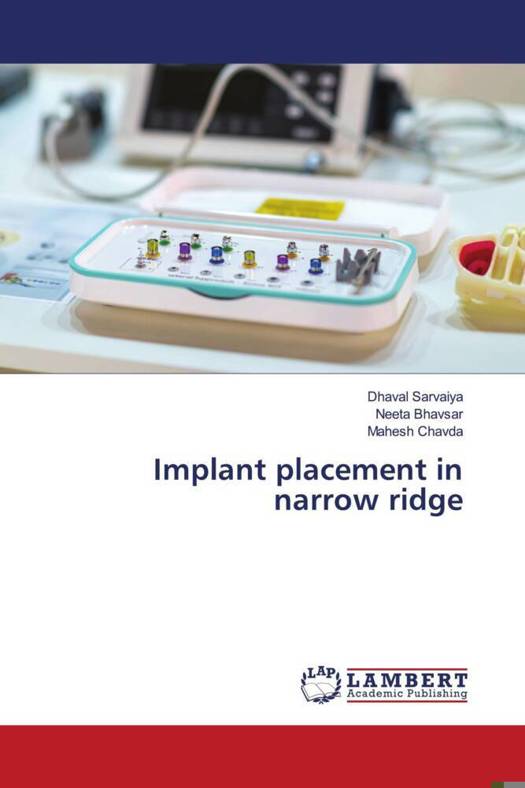
Dental implant placement in a narrow ridge requires careful planning and often the use of ridge augmentation techniques to ensure a stable foundation for the implant. When the jawbone is insufficient in width (horizontal deficiency) or height (vertical deficiency), procedures like bone grafting are performed to augment the ridge. Horizontal ridge augmentation involves grafting bone material to widen the ridge, while vertical augmentation raises the height of the bone using grafts or sinus lift procedures. Additionally, narrow implants, which are specifically designed for such cases, can be used when the available bone volume is limited, providing a reliable solution for implant stability and function. Combining these techniques allows for successful implant placement in challenging anatomical conditions, ensuring optimal outcomes for the patient.
Specificaties
Betrokkenen
- Auteur(s):
- Uitgeverij:
Inhoud
- Aantal bladzijden:
- 176
- Taal:
- Engels
Eigenschappen
- Productcode (EAN):
- 9783330005051
- Verschijningsdatum:
- 29/11/2024
- Uitvoering:
- Paperback
- Formaat:
- Trade paperback (VS)
- Afmetingen:
- 152 mm x 229 mm
- Gewicht:
- 267 g


Alleen bij Standaard Boekhandel
+ 225 punten op je klantenkaart van Standaard Boekhandel
AANGERADEN


Beoordelingen
We publiceren alleen reviews die voldoen aan de voorwaarden voor reviews. Bekijk onze voorwaarden voor reviews.