


- Afhalen na 1 uur in een winkel met voorraad
- Gratis thuislevering in België vanaf € 30
- Ruim aanbod met 7 miljoen producten
- Afhalen na 1 uur in een winkel met voorraad
- Gratis thuislevering in België vanaf € 30
- Ruim aanbod met 7 miljoen producten




€ 55,95
+ 111 punten
Uitvoering
Omschrijving
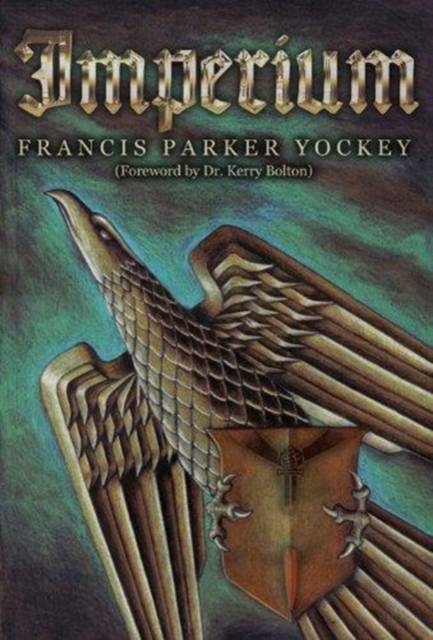
Written without notes in Ireland, and fi rst published pseudonymously in 1948, Imperium is Francis Parker Yockey's masterpiece. It is a critique of 19th-century rationalism and materialism, synthesising Oswald Spengler, Carl Schmitt, and Klaus Haushofer's geopolitics. In particular, it rethinks the themes of Spengler's The Decline of the West in an effort to account for the United States' then recent involvement in World War II and for the task bequeathed to Europe's political soldiers in the struggle to unite the Continent-heroically, rather than economically-in the realisation of the destiny implied in European High Culture. Yockey's radical attack on liberal thought, especially that embodied by Americanism (distinct from America or Americans), condemned his work to obscurity, its appeal limited to the post-war fascist underground. Yet, Imperium transcents both the immediate post-war situation and its initial readership: it opened pathways to a deconstruction of liberalism, and introduced the concept of cultural vitalism- the organic conceptualisation of culture, with all that attends to it. These contributions are even more relevant now than in their day, and provide us with a deeper understanding of, as well as tools to deal with, the situation in the West in current century. It is with this in mind that the present, 900-page, fully-annotated edition is offered, complete with a major foreword by Dr. Kerry Bolton, Julius Evola's review as an afterword (in a fresh new translation), a comprehensive index, a chronology of Yockey's life, and an appendix, revealing, for the first time, much previously unknown information about the author's genealogical background.
Specificaties
Betrokkenen
- Auteur(s):
- Uitgeverij:
Inhoud
- Aantal bladzijden:
- 926
- Taal:
- Engels
Eigenschappen
- Productcode (EAN):
- 9780956183576
- Verschijningsdatum:
- 14/01/2013
- Uitvoering:
- Hardcover
- Formaat:
- Genaaid
- Afmetingen:
- 140 mm x 216 mm
- Gewicht:
- 1301 g


Alleen bij Standaard Boekhandel
+ 111 punten op je klantenkaart van Standaard Boekhandel
AANGERADEN


Beoordelingen
We publiceren alleen reviews die voldoen aan de voorwaarden voor reviews. Bekijk onze voorwaarden voor reviews.