


- Afhalen na 1 uur in een winkel met voorraad
- Gratis thuislevering in België vanaf € 30
- Ruim aanbod met 7 miljoen producten
- Afhalen na 1 uur in een winkel met voorraad
- Gratis thuislevering in België vanaf € 30
- Ruim aanbod met 7 miljoen producten





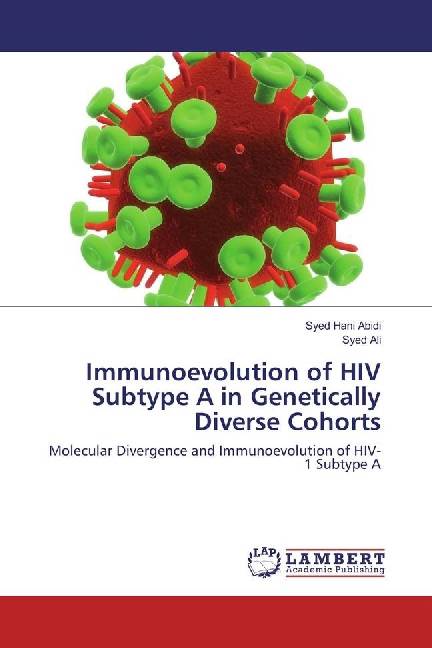
Immunoevolution of HIV Subtype A in Genetically Diverse Cohorts
Molecular Divergence and Immunoevolution of HIV-1 Subtype A
Syed Hani Abidi, Syed Ali
Paperback | Engels
€ 51,45
+ 102 punten
Omschrijving
Human Immunodeficiency Virus type 1 (HIV-1) rapidly mutates under selection pressures from host immunity, which allows the amplification of escape mutations that enables the virus to evade the host's immune response. Earliest traceable HIV-1 subtype A sequences (in sequence repository) were of African origin from around mid-80s. In subsequent years, as subtype A viruses were disseminated globally, sequences from different parts of world also started appearing. In the past few decades, HIV-1 subtype A has established itself in certain regions of the world including Kenya, Uganda, Japan, Azerbaijan, Belgium, Botswana, Belarus, Congo, and recently, Afghanistan and Pakistan. Analysis of the evolutionary patterns of a virus in the context of its host populations sheds light on the selection pressures on viruses that are associated with specific host immune milieus. This type of information is useful in designing vaccines and drugs against the virus.
Specificaties
Betrokkenen
- Auteur(s):
- Uitgeverij:
Inhoud
- Aantal bladzijden:
- 196
- Taal:
- Engels
Eigenschappen
- Productcode (EAN):
- 9783659908187
- Uitvoering:
- Paperback
- Afmetingen:
- 150 mm x 220 mm



Alleen bij Standaard Boekhandel
+ 102 punten op je klantenkaart van Standaard Boekhandel
AANGERADEN


Beoordelingen
We publiceren alleen reviews die voldoen aan de voorwaarden voor reviews. Bekijk onze voorwaarden voor reviews.