


- Afhalen na 1 uur in een winkel met voorraad
- Gratis thuislevering in België vanaf € 30
- Ruim aanbod met 7 miljoen producten
- Afhalen na 1 uur in een winkel met voorraad
- Gratis thuislevering in België vanaf € 30
- Ruim aanbod met 7 miljoen producten





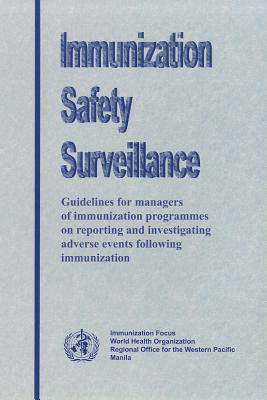
Immunization Safety Surveillance
Guidelines for Managers of Immunization Programmes on Reporting and Investigating Adverse Events Following Immunization
Who Regional Office for the Western Pacific
€ 9,45
+ 18 punten
Uitvoering
Omschrijving
A practical guide to the establishment of a surveillance system for monitoring and reporting adverse events following immunization. Addressed to the managers of immunization programmes in Western Pacific countries, the guide gives particular attention to the special problems that arise during mass campaigns, when an increase in adverse events can be predicted, the risk of programme errors is enhanced, and public and media scrutiny will be high. While aimed primarily at the prevention of errors and the assurance of safe immunizations, the guide also responds to the need to maintain programme credibility and allay the fears of communities and the press. Throughout, numerous checklists, diagrams, tables, and case studies are used to highlight key messages and illustrate the importance of careful surveillance, reporting, and investigation.
The guide has seven concise chapters. A brief explanation of the need for safety surveillance is followed by a classification of adverse events into five categories and a discussion of the significance of each. Particular attention is given to common minor vaccine reactions and their treatment, and rare vaccine reactions, including onset intervals and rates. The chapter also discusses common programme errors, such as non-sterile injections and the incorrect preparation or handling of vaccines, and explains how to estimate the number of coincidental events in the day, week, and month after immunization. Anxiety, fainting, and other reactions to injections are also briefly discussed.
Chapter three provides guidelines for establishing a system for immunization safety surveillance, giving particular attention to objectives, roles, and responsibilities, and the need to engage a country's national regulatory authority. A chapter on the reporting of adverse events provides a list of suggested reportable events, together with their definitions, and discusses the minimum contents of a report. Minor reactions that should not be reported are also identified.
Advice on the investigation of adverse events is presented in chapter five, which explains when and how to investigate, concentrating on programme errors in the storage, handling, or administration of vaccines as the most likely causes of adverse events. Additional information includes the exact steps to follow during an investigation and advice on when laboratory testing is needed. The remaining chapters discuss the best ways of communicating information to communities and the press, including guidelines for conducting a media conference and issuing a press release, and explain how to evaluate the effectiveness of safety surveillance.
Further technical information is provided in a series of annexes, which set out case definitions and recommended treatments for reportable adverse events, provide guidelines for the recognition and treatment of anaphylaxis, and compare the risks associated with common childhood diseases with the risks associated with immunization.
The guide has seven concise chapters. A brief explanation of the need for safety surveillance is followed by a classification of adverse events into five categories and a discussion of the significance of each. Particular attention is given to common minor vaccine reactions and their treatment, and rare vaccine reactions, including onset intervals and rates. The chapter also discusses common programme errors, such as non-sterile injections and the incorrect preparation or handling of vaccines, and explains how to estimate the number of coincidental events in the day, week, and month after immunization. Anxiety, fainting, and other reactions to injections are also briefly discussed.
Chapter three provides guidelines for establishing a system for immunization safety surveillance, giving particular attention to objectives, roles, and responsibilities, and the need to engage a country's national regulatory authority. A chapter on the reporting of adverse events provides a list of suggested reportable events, together with their definitions, and discusses the minimum contents of a report. Minor reactions that should not be reported are also identified.
Advice on the investigation of adverse events is presented in chapter five, which explains when and how to investigate, concentrating on programme errors in the storage, handling, or administration of vaccines as the most likely causes of adverse events. Additional information includes the exact steps to follow during an investigation and advice on when laboratory testing is needed. The remaining chapters discuss the best ways of communicating information to communities and the press, including guidelines for conducting a media conference and issuing a press release, and explain how to evaluate the effectiveness of safety surveillance.
Further technical information is provided in a series of annexes, which set out case definitions and recommended treatments for reportable adverse events, provide guidelines for the recognition and treatment of anaphylaxis, and compare the risks associated with common childhood diseases with the risks associated with immunization.
Specificaties
Betrokkenen
- Auteur(s):
- Uitgeverij:
Inhoud
- Aantal bladzijden:
- 56
- Taal:
- Engels
- Reeks:
Eigenschappen
- Productcode (EAN):
- 9789290611820
- Verschijningsdatum:
- 1/12/1999
- Uitvoering:
- Paperback
- Formaat:
- Trade paperback (VS)
- Afmetingen:
- 206 mm x 292 mm
- Gewicht:
- 226 g


Alleen bij Standaard Boekhandel
+ 18 punten op je klantenkaart van Standaard Boekhandel

Beoordelingen
We publiceren alleen reviews die voldoen aan de voorwaarden voor reviews. Bekijk onze voorwaarden voor reviews.