


- Afhalen na 1 uur in een winkel met voorraad
- Gratis thuislevering in België vanaf € 30
- Ruim aanbod met 7 miljoen producten
- Afhalen na 1 uur in een winkel met voorraad
- Gratis thuislevering in België vanaf € 30
- Ruim aanbod met 7 miljoen producten





Omschrijving
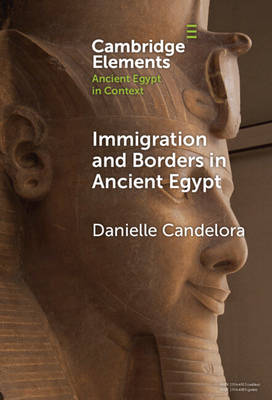
The aim of this Element is to explore borders in ancient Egypt - both the territorial and ideological boundaries of the state as well as the divisions such lines draw between 'Egyptians' and 'Others.' Despite the traditional understanding of ancient Egypt as an insular society isolated by its borders, many foreigners settled in Egypt over the course of the longue durée, significantly impacting its culture. After examining the applicability of territorial state borders to the ancient world, the boundaries of ancient Egypt are investigated, questioning how they were defined, when, and by whom. Then a framework is presented for considering the reflexive ontological relationship between borders and immigrants, grappling with how identity is affected by elements like geography, the state, and locality. Finally, case studies are presented that critically examine ancient Egypt's northern, eastern, western and southern 'borders' and the people who crossed them.
Specificaties
Betrokkenen
- Auteur(s):
- Uitgeverij:
Inhoud
- Aantal bladzijden:
- 90
- Taal:
- Engels
- Reeks:
Eigenschappen
- Productcode (EAN):
- 9781009500128
- Verschijningsdatum:
- 2/04/2026
- Uitvoering:
- Hardcover
- Formaat:
- Genaaid
- Afmetingen:
- 152 mm x 229 mm
- Gewicht:
- 290 g


Alleen bij Standaard Boekhandel
+ 225 punten op je klantenkaart van Standaard Boekhandel
Cadeau

AANGERADEN


Beoordelingen
We publiceren alleen reviews die voldoen aan de voorwaarden voor reviews. Bekijk onze voorwaarden voor reviews.