


- Afhalen na 1 uur in een winkel met voorraad
- Gratis thuislevering in België vanaf € 30
- Ruim aanbod met 7 miljoen producten
- Afhalen na 1 uur in een winkel met voorraad
- Gratis thuislevering in België vanaf € 30
- Ruim aanbod met 7 miljoen producten





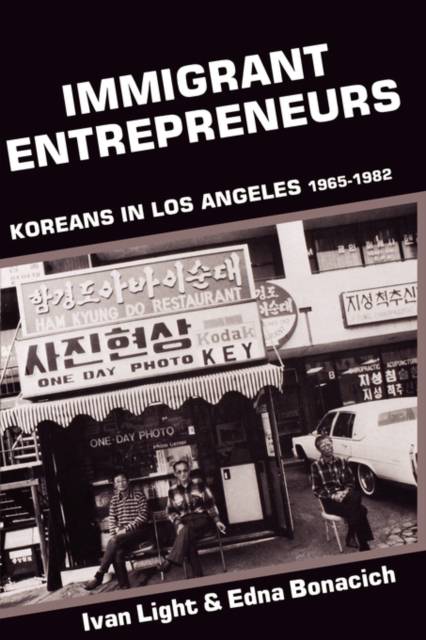
Immigrant Entrepreneurs
Koreans in Los Angeles, 1965-1982
Ivan Light, Edna Bonacich
Paperback | Engels
€ 62,95
+ 125 punten
Omschrijving
A decade in preparation, Immigrant Entrepreneurs offers the most comprehensive case study ever completed of the causes and consequences of immigrant business ownership. Koreans are the most entrepreneurial of America's new immigrants. By the mid-1970s Americans had already become aware that Korean immigrants were opening, buying, and operating numerous business enterprises in major cities. When Koreans flourished in small business, Americans wanted to know how immigrants could find lucrative business opportunities where native-born Americans could not. Somewhat later, when Korean-black conflicts surfaced in a number of cities, Americans also began to fear the implications for intergroup relations of immigrant entrepreneurs who start in the middle rather than at the bottom of the social and economic hierarchy.
Nowhere was immigrant enterprise more obvious or impressive than in Los Angeles, the world's largest Korean settlement outside of Korea and America's premier city of small business. Analyzing both the short-run and the long-run causes of Korean entrepreneurship, the authors explain why the Koreans could find, acquire, and operate small business firms more easily than could native-born residents. They also provide a context for distinguishing clashes of culture and clashes of interest which cause black-Korean tensions in cities, and for framing effective policies to minimize the tensions.
Nowhere was immigrant enterprise more obvious or impressive than in Los Angeles, the world's largest Korean settlement outside of Korea and America's premier city of small business. Analyzing both the short-run and the long-run causes of Korean entrepreneurship, the authors explain why the Koreans could find, acquire, and operate small business firms more easily than could native-born residents. They also provide a context for distinguishing clashes of culture and clashes of interest which cause black-Korean tensions in cities, and for framing effective policies to minimize the tensions.
Specificaties
Betrokkenen
- Auteur(s):
- Uitgeverij:
Inhoud
- Aantal bladzijden:
- 506
- Taal:
- Engels
Eigenschappen
- Productcode (EAN):
- 9780520076563
- Verschijningsdatum:
- 8/08/1991
- Uitvoering:
- Paperback
- Formaat:
- Trade paperback (VS)
- Afmetingen:
- 154 mm x 228 mm
- Gewicht:
- 689 g


Alleen bij Standaard Boekhandel
+ 125 punten op je klantenkaart van Standaard Boekhandel
AANGERADEN


Beoordelingen
We publiceren alleen reviews die voldoen aan de voorwaarden voor reviews. Bekijk onze voorwaarden voor reviews.