


- Afhalen na 1 uur in een winkel met voorraad
- Gratis thuislevering in België vanaf € 30
- Ruim aanbod met 7 miljoen producten
- Afhalen na 1 uur in een winkel met voorraad
- Gratis thuislevering in België vanaf € 30
- Ruim aanbod met 7 miljoen producten





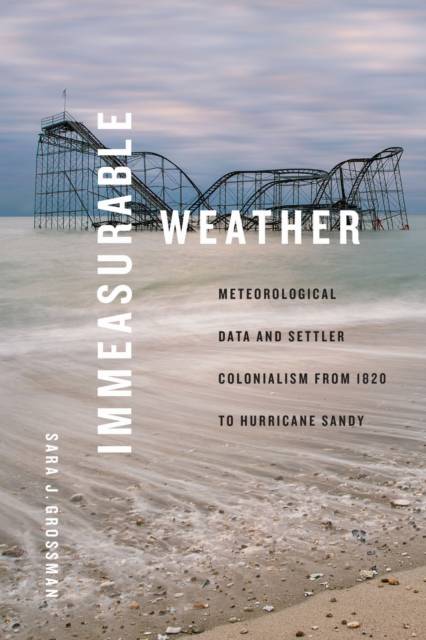
Immeasurable Weather
Meteorological Data and Settler Colonialism from 1820 to Hurricane Sandy
Sara J Grossman
€ 42,95
+ 85 punten
Uitvoering
Omschrijving
In Immeasurable Weather Sara J. Grossman explores how environmental data collection has been central to the larger project of settler colonialism in the United States. She draws on an extensive archive of historical and meteorological data spanning two centuries to show how American scientific institutions used information about the weather to establish and reinforce the foundations of a white patriarchal settler society. Grossman outlines the relationship between climate data and state power in key moments in the history of American weather science, from the nineteenth-century public data-gathering practices of settler farmers and teachers and the automation of weather data during the Dust Bowl to the role of meteorological satellites in data science's integration into the militarized state. Throughout, Grossman shows that weather science reproduced the natural world as something to be measured, owned, and exploited. This data gathering, she contends, gave coherence to a national weather project and to a notion of the nation itself, demonstrating that weather science's impact cannot be reduced to a set of quantifiable phenomena.
Specificaties
Betrokkenen
- Auteur(s):
- Uitgeverij:
Inhoud
- Aantal bladzijden:
- 264
- Taal:
- Engels
- Reeks:
Eigenschappen
- Productcode (EAN):
- 9781478025023
- Verschijningsdatum:
- 25/08/2023
- Uitvoering:
- Paperback
- Formaat:
- Trade paperback (VS)
- Afmetingen:
- 152 mm x 229 mm
- Gewicht:
- 353 g


Alleen bij Standaard Boekhandel
+ 85 punten op je klantenkaart van Standaard Boekhandel
Cadeau

AANGERADEN


Beoordelingen
We publiceren alleen reviews die voldoen aan de voorwaarden voor reviews. Bekijk onze voorwaarden voor reviews.